As a dentist practicing right here in the heart of Beverly Hills, I see smiles of all shapes and sizes every single day. I am Dr. Sepehr Nassiripour, and if there is one thing I am passionate about, it is helping families build a foundation for perfect oral health. While we often focus on the aesthetics of a smile in this city, the true beauty of healthy teeth starts with the basics: keeping them cavity-free.
Parenting is a tough job. Between soccer practice, homework, and trying to get a decent dinner on the table, oral hygiene can sometimes slip down the priority list. However, tooth decay remains the most common chronic disease among children. The good news? It is almost entirely preventable. You don’t need a Hollywood budget to give your child a superstar smile. You just need the right knowledge and a consistent routine.
I have compiled my top strategies to help you navigate this journey. Here is everything you need to know to prevent cavities in children, ensuring their teeth stay strong from their first tooth until they head off to college.
Understanding the “Sugar Bug” Battle
Before we dive into the tips, it helps to understand what we are fighting against. Cavities, or dental caries, are caused by specific bacteria in the mouth. When your child eats sugary or starchy foods, these bacteria feast on the leftovers on the teeth. As they eat, they produce acid. This acid attacks the hard outer layer of the tooth, called enamel.
If this happens often enough without proper cleaning, the enamel breaks down, and a hole—or cavity—forms. To prevent cavities in children, we have to interrupt this process. We need to reduce the bacteria, limit the sugar, and strengthen the enamel.
1. Start Oral Care Before the First Tooth Arrives
Many parents ask me when they should start cleaning their child’s mouth. The answer might surprise you: right away. You should begin oral care habits long before that first tiny tooth pops through the gum line.
For infants, use a clean, damp washcloth or a piece of gauze to gently wipe down their gums after feedings. This clears away bacteria and gets your baby used to the sensation of having their mouth cleaned. Once that first tooth appears, usually around six months, switch to a soft-bristled, infant-sized toothbrush and a smear of toothpaste roughly the size of a grain of rice.
Establishing this routine early does two things. First, it physically cleans the mouth. Second, it sets a psychological precedent. Your child grows up understanding that oral hygiene is just a normal part of their day, like changing diapers or taking a bath.
2. Master the Two-by-Two Rule
Consistency is key. As your children grow, the most effective tool in your arsenal is the “Two-by-Two” rule. This means brushing for two full minutes, two times a day. Most children—and frankly, many adults—rush through brushing, spending only about 45 seconds on the task. This leaves significant plaque behind.
To prevent cavities in children effectively, we need to clean every surface of every tooth. I recommend using a timer, a sand hourglass, or playing a two-minute song to keep them engaged. Whether you use a manual or an electric toothbrush, the technique matters. Teach them to angle the bristles toward the gums and use gentle, circular motions rather than sawing back and forth.
3. Flossing: The Forgotten Hero
If there is one step that gets skipped the most, it is flossing. However, brushing alone only cleans about 60% of the tooth surfaces. The bristles of a toothbrush simply cannot reach the tight spaces between teeth where food particles and plaque love to hide.
As soon as your child has two teeth that touch, it is time to start flossing. Until they have the dexterity to do it themselves (usually around age 10), you will need to do this for them. Floss picks are often easier for parents to maneuver in small mouths than traditional string floss. Making this a nightly habit is crucial to prevent “interproximal” cavities, which form between the teeth and are very common in kids.
4. Rethink the Snacking Habits
In my Beverly Hills practice, I spend a lot of time discussing diet. It is not just about what your kids eat, but how often they eat it. Every time your child eats or drinks something other than water, their mouth becomes acidic for about 20 minutes. If they are constantly grazing or sipping on juice throughout the day, their teeth are under a constant acid attack.
To prevent cavities in children, try to limit snacking frequency. Here are some tooth-friendly snack swaps:
- Swap sticky gummies for fresh fruit like apples or pears (which naturally scrub teeth).
- Swap crackers and chips (which stick to teeth) for cheese sticks or yogurt (which contain calcium).
- Swap juice boxes for water.
One compelling data point reinforces why this matters: According to the National Institute of Dental and Craniofacial Research, approximately 42% of children aged 2 to 11 have had dental caries in their primary teeth. Much of this is attributed to high-sugar diets and frequent snacking habits. By consolidating sweets to mealtime rather than spread out as snacks, saliva production is higher, helping to wash away the sugars more effectively.
5. Embrace the Power of Fluoride
Fluoride is often called “nature’s cavity fighter,” and for good reason. It is a mineral that helps repair the early stages of tooth decay even before the decay becomes visible. It makes the enamel more resistant to the acid attacks I mentioned earlier.
Ensure your child is using fluoride toothpaste appropriate for their age. If you live in an area without fluoridated tap water, or if you exclusively drink bottled water, speak to your dentist. We might recommend fluoride supplements or a professional fluoride varnish application during their cleaning appointments. It acts as a shield, giving the teeth an extra layer of defense.
6. Consider Dental Sealants
If you want a secret weapon to prevent cavities in children, ask about dental sealants. The molars (the back teeth used for chewing) have deep grooves and pits on their biting surfaces. Even with excellent brushing, it is nearly impossible for a toothbrush bristle to reach into the bottom of these microscopic grooves.
A sealant is a thin, protective coating that I paint onto the chewing surfaces of the back teeth. It effectively “seals out” food and bacteria. It is painless, fast, and incredibly effective.
The effectiveness is backed by strong evidence. According to the Centers for Disease Control and Prevention (CDC), dental sealants prevent 80% of cavities in the back teeth specifically, where 9 out of 10 cavities occur. This protection can last for several years, getting your child through their most cavity-prone years safely.
For more in-depth information on how sealants work and their benefits, you can read this resource from the National Institute of Dental and Craniofacial Research.
7. Make Water the Beverage of Choice
Hydration is trendy in Beverly Hills, and it should be for your kids, too. Water is the absolute best drink for your child’s teeth. Not only does it keep them hydrated, but it also helps rinse away food particles and residues that bacteria love.
If your local water supply is fluoridated, drinking tap water is an easy, free way to strengthen teeth. Encourage your child to rinse their mouth with water after eating sugary treats if they cannot brush immediately. This simple act neutralizes acids and helps restore the pH balance in the mouth.
8. Establish a “Dental Home” Early
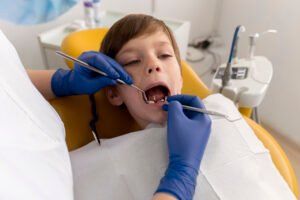
I recommend bringing your child in for their first dental visit by their first birthday. We call this establishing a “dental home.” These early visits are rarely about drilling or filling; they are about education, prevention, and comfort.
When a child visits me early, they learn that the dentist is a friendly person who counts their teeth. We can spot potential issues—like weak enamel or thumb-sucking habits—long before they cause permanent damage. Waiting until a child has a toothache to visit the dentist creates a negative association with dental care. Regular checkups every six months allow for professional cleanings that remove hardened tartar that brushing at home cannot remove.
9. Lead by Example
Children are incredible mimics. If they see you neglecting your oral health, they will likely do the same. If they see you treating brushing and flossing as a chore or a punishment, they will adopt that attitude. However, if they see you taking pride in your smile, they will want to follow suit.
Brush together as a family. Let them see you floss. Talk positively about the dentist. When I see parents with excellent oral hygiene, I almost always see children with healthy smiles. You are their most influential teacher.
10. Gamify the Process
Let’s be honest: brushing teeth can be boring for a 7-year-old. To prevent cavities in children, we have to make the process engaging. In our digital age, there are countless apps that turn brushing into a game, with characters that fight “sugar bugs” while your child brushes.
If you prefer a low-tech approach, use a sticker chart. Every morning and night they brush and floss successfully, they get a sticker. After a certain number of stickers, reward them with a small prize (preferably not candy!). Let them pick out their own toothbrush with their favorite cartoon character or a toothpaste flavor they enjoy, like bubblegum or watermelon. When they feel a sense of ownership over the process, they are more likely to participate willingly.
Building a Lifetime of Healthy Smiles
Preventing cavities is not just about avoiding fillings; it is about setting your child up for a lifetime of health and confidence. A healthy mouth contributes to better nutrition, better sleep, and higher self-esteem. By implementing these ten expert tips, you are investing in your child’s future well-being.
Remember, you don’t have to do it alone. As your dentist, I am your partner in this journey. Whether you are here in Beverly Hills or reading this from halfway across the world, the principles remain the same. Start early, stay consistent, and keep smiling. We can beat the sugar bugs together.