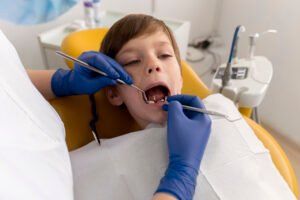
As a parent, you make countless decisions for your child every day. From what they eat for breakfast to which extracurricular activities they join, every choice feels significant. One question I hear frequently in my practice involves oral healthcare: “Dr. Nassiripour, should I take my child to a pediatric dentist, or is the whole-family dentist okay?”
This is a fantastic question. While both types of dentists are qualified to clean teeth and fill cavities, there are distinct differences in their training, office environments, and approaches to care. Making the right choice now can set the stage for your child’s dental health for the rest of their life. I want to help you navigate this decision so you can feel confident that your little one is in the best hands possible.
Understanding the Basics: Similarities and Differences
Before we dive into the specifics, it is important to understand that both general dentists and pediatric dentists start their careers in the same place. We all complete four years of dental school to earn either a DDS (Doctor of Dental Surgery) or a DMD (Doctor of Dental Medicine). This means any licensed dentist is technically allowed to treat patients of any age.
However, the paths diverge after dental school. Think of it like medicine: your family doctor can treat a child’s cold, but if your child has a specific developmental issue or a complex condition, you would likely see a pediatrician or a specialist. The same logic applies to dentistry.
What is a General Dentist?
A general dentist is like the primary care physician of the dental world. They are trained to diagnose and treat oral health issues for patients of all ages, from toddlers to seniors. Many families love the convenience of a general dentist because the entire family can have their appointments on the same day in the same location.
General dentists provide a wide range of services, including:
- Routine cleanings and exams
- Fillings and crowns
- Root canals
- Cosmetic procedures like veneers
- Gum care
If your child generally has healthy teeth and isn’t afraid of the dentist, a general dentist with a family-friendly practice can be a great option.
What is a Children Dentist?
A pediatric dentist is a true specialist. After completing the standard four years of dental school, we undergo an additional two to three years of specialized residency training. This training focuses exclusively on the oral health of infants, children, adolescents, and children with special health care needs.
During this residency, we study child psychology, growth and development, and specific behavioral management techniques. If you are looking for a highly trained specialist for kids teeth, a pediatric dentist is the specific designation you want to look for. We are the “pediatricians of dentistry.”
The Key Differences in Approach and Environment
When you walk into a dental office, you can usually tell immediately if it is designed for adults or for children. The environment plays a massive role in how a child perceives the experience. In my experience, reducing anxiety starts the moment you walk through the door.
1. The Office Atmosphere
General dental offices are designed to be calming and professional for adults. The colors might be muted, the waiting room might have magazines, and the equipment is standard size. While this is comfortable for you and me, it can sometimes feel cold or intimidating to a child.
Children dental offices are designed with the child’s imagination in mind. We often use bright colors, offer games in the waiting area, and play cartoons on screens above the dental chairs. The equipment is physically smaller to fit a child’s mouth comfortably. We minimize the sight of scary-looking tools. The goal is to make the office feel like a fun destination rather than a medical clinic.
2. Behavior Management and Psychology
This is perhaps the most significant difference. Children are not just “small adults.” They cannot always sit still, they may not understand why we are putting instruments in their mouths, and they have emotional reactions that are different from adults.
In pediatric dentistry, we use specific techniques to help children feel safe. one common method is “Tell-Show-Do.”
- Tell: I explain what I am going to do in simple, non-scary language (e.g., “I’m going to count your teeth”).
- Show: I show the child the tool and maybe demonstrate it on their finger or a stuffed animal.
- Do: Only then do I perform the action.
General dentists are skilled professionals, but they may not use these specific psychological strategies as frequently if they primarily treat adults.
Handling Dental Anxiety
Fear of the dentist is a very real issue. In fact, negative experiences during childhood are the primary reason many adults avoid the dentist later in life. We want to break that cycle.
Data Point: According to research published by the National Institutes of Health, dental anxiety affects approximately 10% to 20% of the population, and this fear often stems from traumatic experiences in childhood. By choosing a provider who specializes in anxiety reduction for kids, we can significantly lower the risk of your child developing a lifelong phobia.
Children dentists are trained in sedation dentistry for children who are extremely anxious or need extensive work. While some general dentists offer sedation, pediatric specialists have specific training on safe dosing and monitoring for small, developing bodies.
Specialized Care for Growing Smiles
Children’s mouths change rapidly. From the eruption of the first baby tooth to the loss of the last primary molar, there is constant movement and growth. A specialist for kids teeth is trained to monitor this growth closely to catch problems early.
Monitoring Jaw Development
We don’t just look at cavities; we look at the bite. We keep a close eye on how the jaw is growing and how the teeth are coming in. Early detection of orthodontic issues (like a crossbite or severe crowding) can sometimes be corrected more easily while the bones are still growing. While general dentists check for this too, pediatric dentists act as the “gatekeepers” for early orthodontic intervention.
Treating “Baby” Teeth
I often hear people say, “Why fix baby teeth if they are just going to fall out anyway?” This is a dangerous myth. Primary teeth serve crucial functions:
- They hold space for the permanent teeth.
- They help in the development of speech.
- They are essential for proper nutrition (chewing).
If a baby tooth is lost too early due to decay, the surrounding teeth can drift into the empty space, causing major crowding problems when the permanent tooth tries to erupt. We treat primary teeth with the same care and precision as permanent teeth because they are the foundation for the future.
Data Point: The Centers for Disease Control and Prevention (CDC) reports that cavities are one of the most common chronic diseases of childhood in the United States. About 20% of children aged 5 to 11 years have at least one untreated decayed tooth. This highlights why specialized, preventive focus is so vital.
Care for Children with Special Needs
If your child has special needs—whether physical, cognitive, or sensory—finding the right dentist is even more critical. This is an area where pediatric dentists truly shine.
During our residency, we receive extensive training on how to treat patients with autism, Down syndrome, cerebral palsy, and other conditions. We understand that a child with sensory processing issues might be overwhelmed by the bright light or the sound of the suction. We know how to adapt the appointment to accommodate these needs.
We might dim the lights, use weighted blankets, or schedule longer appointments to allow for breaks. Many general dentists are wonderful, but they may not have the specific equipment or staffing levels required to provide this level of personalized accommodation.
When Should Your Child Visit the Dentist?
The American Academy of Children Dentistry (AAPD) recommends that a child visit the dentist by age one or within six months of the eruption of their first tooth. This might seem early, but this “Age 1 Visit” is mostly about education for you, the parent.
For more information on why this early timeline is so important, you can read this article from the American Dental Association’s MouthHealthy website, which explains the stages of dental development beautifully.
During these early visits, I talk to parents about:
- How to clean an infant’s mouth.
- Teething discomfort.
- Habits like thumb-sucking or pacifier use.
- Diet and bottle-feeding practices that can lead to decay.
A general dentist may not always see children this young, whereas a pediatric dentist is equipped to perform a “knee-to-knee” exam where the baby stays safely in the parent’s lap.
Making the Decision: Questions to Ask
If you are still on the fence about which type of dentist is right for your family, I recommend calling the prospective office and asking a few questions. Their answers will give you a good sense of whether they are a good fit for your child.
- “At what age do you start seeing children?” If they say age 3 or 4, they might be a general dentist. Children dentists usually want to see them by age 1.
- “How do you handle a child who is crying or afraid?” Listen for answers involving patience, “Tell-Show-Do,” and positive reinforcement. Be wary of answers that sound impatient or rely heavily on immediate sedation for minor issues without trying other methods first.
- “Do you have special equipment for children?” Ask about the size of the x-ray sensors or if they have kid-sized chairs.
- “Are you board certified?” While all dentists are licensed, board certification for pediatric dentists represents the highest level of commitment to education and excellence in the specialty.
The Financial Aspect
I know that for many families, insurance and cost are major factors. Generally speaking, pediatric dentists and general dentists charge similar fees for routine procedures like cleanings and fillings. However, because pediatric dentists are specialists, some specific procedures might have slightly higher fees, or the co-pay might differ depending on your insurance plan.
It is always worth checking with your insurance provider to see if you need a referral to see a specialist (though this is rare in dentistry compared to medicine). In my opinion, the value of a positive, tear-free experience is worth every penny, as it saves money on future extensive dental work caused by avoidance.
Final Thoughts on Your Child’s Smile
Choosing a dental home for your child is a personal decision. There are many fantastic general dentists who have a natural gift with children and can provide excellent care. If your child is easy-going, has no major dental issues, and your family dentist is comfortable seeing them, that is a perfectly valid route.
However, if your child is anxious, has special needs, or requires extensive dental work, seeking out a specialist for kids teeth is the best way to ensure they get the care they need in an environment built just for them. My goal as Dr. Nassiripour is to ensure that when your child grows up and “graduates” to an adult dentist, they do so with a healthy smile and a positive attitude toward their oral health.
Remember, we are on the same team. We both want your child to grow up with a strong, healthy smile that lights up the room. By prioritizing their dental health now, you are giving them a gift that lasts a lifetime.