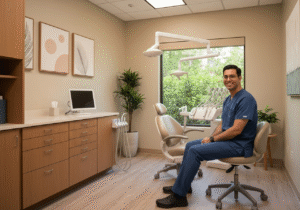
As a pediatric dentist here in the heart of Beverly Hills, I meet parents every single day who want nothing but the absolute best for their children. We talk about the best schools, the best extracurricular activities, and, naturally, the best healthcare. However, when the conversation shifts to pediatric dental insurance, I often see a look of confusion wash over even the most savvy parents. It is completely understandable. Insurance policies are filled with jargon, fine print, and varying tiers of coverage that can make anyone’s head spin.
I am Dr. Sepehr Nassiripour, and my goal today is to demystify this process for you. Navigating dental benefits shouldn’t feel like pulling teeth. Understanding what is covered—and what isn’t—is the first step toward maximizing your benefits and ensuring your child grows up with a healthy, confident smile. Living in Beverly Hills, we are accustomed to a high standard of living, and your child’s oral health care should be no exception. Let’s dive deep into how these plans work, what the “fine print” actually means for your wallet, and how to get the most out of your coverage.
The Basics: How Children Dental Insurance Actually Works
Before we look at specific procedures, we need to understand the structure of most dental plans. Unlike medical insurance, which is designed to cover unpredictable illnesses and major catastrophes, dental insurance is better viewed as a benefit plan that helps offset the cost of maintaining oral health. It is designed to be preventive.
Most pediatric dental insurance plans operate on a specific framework known in the industry as “100-80-50.” This isn’t a hard rule for every single policy, but it is the most common structure I see at my practice. Here is the breakdown:
- 100% Coverage: This usually applies to preventive care (checkups, cleanings, and X-rays).
- 80% Coverage: This typically covers basic procedures (fillings, extractions, and periodontal work).
- 50% Coverage: This is generally reserved for major procedures (crowns, bridges, and sometimes orthodontics).
When you are looking at plans, or reviewing the one you already have, keep in mind that “covered” does not always mean “free.” It means the insurance company pays a percentage, and you are responsible for the rest. This remainder is your co-payment.
Preventive Care: The Golden Ticket
In my opinion, the best part of dental insurance is the coverage for preventive care. Insurance companies are smart; they know that if we catch problems early, it saves them money in the long run. That is why most PPO plans cover preventive services at 100%, usually with no deductible required.
For your child, this typically includes:
- Bi-annual Examinations: Seeing me twice a year allows us to monitor jaw growth and catch cavities when they are tiny.
- Professional Cleanings (Prophylaxis): Removing plaque and tartar that brushing at home can’t reach.
- Fluoride Treatments: A topical application to strengthen enamel and fight decay.
- Digital X-Rays: These are essential for seeing between the teeth where cavities love to hide.
- Dental Sealants: A protective coating painted on the chewing surfaces of back teeth (molars).
A Note on Dental Sealants
I want to highlight sealants because they are a game-changer for kids. Many parents in Beverly Hills ask if these are necessary. Absolutely. According to the Centers for Disease Control and Prevention (CDC), dental sealants prevent 80% of cavities in the back teeth, where 9 out of 10 cavities occur. Most insurance plans cover sealants for children up to a certain age (usually 14 or 15), so it is a benefit you definitely want to utilize.
Basic Restorative Care: Dealing with Cavities
Even with the best brushing habits, cavities can happen. When they do, we move into the “Basic Restorative” category of your pediatric dental insurance. This is where coverage usually drops to around 80%.
The most common procedure here is the dental filling. However, there is a nuance here that is specific to aesthetic-conscious areas like Beverly Hills. There are two main types of fillings: amalgam (silver) and composite resin (white/tooth-colored).
Almost all parents I speak with prefer composite fillings because they look natural. However, some insurance plans will only cover the cost of the silver filling on back teeth. This is called a “downgrade.” If you choose the white filling (which I almost always recommend for the health and look of the tooth), the insurance pays the silver rate, and you pay the difference. It is important to know this going in so there are no surprises.
Major Procedures: When More Work is Needed
Major procedures are covered at usually 50%. In pediatric dentistry, we try to avoid these through prevention, but sometimes they are necessary. This category includes:
- Stainless Steel or Zirconia Crowns: Used when a tooth is too damaged for a filling. Zirconia is the white, aesthetic version often preferred here in Beverly Hills, but like white fillings, insurance may only cover the cost of the steel version.
- Space Maintainers: If a baby tooth is lost too early, we need to hold that space open so the adult tooth can come in straight.
- Pulp Therapy (Baby Root Canals): Treating an infection deep inside the tooth.
Because the coverage is lower (50%) and the costs are higher, this is where your annual maximum becomes very important. Most plans have a cap on how much they will pay out in a single year, typically ranging between $1,000 and $2,000 per child.
The Big Question: Orthodontics and Braces
Living in Southern California, a straight, bright smile is practically a requirement. I get asked about braces and Invisalign constantly. Does pediatric dental insurance cover them?
The answer is: It depends, but there are limits.
Orthodontic coverage is usually a separate rider on your dental policy. Unlike the annual maximum for general dentistry, orthodontic coverage usually has a Lifetime Maximum. This means the insurance company will pay a specific amount (often $1,000 to $2,500) toward braces once in your child’s life. Once that money is used, it is gone.
Furthermore, insurance generally covers orthodontics only if it is “medically necessary.” If the braces are strictly for cosmetic reasons, coverage might be denied. However, severe crowding or bite alignment issues usually qualify. It is vital that we submit a pre-treatment estimate to see exactly what your plan will contribute before we begin.
PPO vs. HMO in Beverly Hills
In our area, the two most common plan types are PPO (Preferred Provider Organization) and HMO (Health Maintenance Organization). The difference in experience can be drastic.
HMO Plans: These plans have lower premiums, but they restrict you to a very specific list of dentists. You generally have to have a primary dentist assigned to you. In high-demand areas, it can sometimes be difficult to find a pediatric specialist who accepts HMO plans due to the low reimbursement rates that force clinics to see a high volume of patients quickly.
PPO Plans: These are far more popular in Beverly Hills. They allow you to see any dentist you want. If the dentist is “in-network,” you get negotiated rates. If the dentist is “out-of-network,” the insurance still pays a portion of the fee, but you have more freedom to choose a provider based on quality, trust, and comfort rather than just a list.
Why “Out-of-Network” Might Be Better for Your Child
This is a concept that is often misunderstood. Many top-tier pediatric dentists in Beverly Hills are “out-of-network” with certain providers. This does not mean you cannot use your insurance. It simply means the dentist has not signed a contract agreeing to the insurance company’s fixed fees.
Why would a dentist do this? To maintain a higher standard of care. Insurance contracts often dictate which materials we can use and how much time we can spend with a patient. By remaining out-of-network or fee-for-service, I can use the highest quality bio-compatible materials, invest in the latest low-radiation technology, and spend ample time making sure your child feels safe and unhurried.
Most PPO plans have “out-of-network benefits.” This means if you visit my office, we still bill your insurance, and they send a check to cover a portion of the cost. You pay the difference, but you gain the peace of mind that comes with premium, personalized care.
The Financial Impact of Neglect
Some parents consider skipping dental insurance or skipping appointments to save money. I strongly advise against this. From a financial perspective, reactive dentistry is much more expensive than preventive dentistry.
Consider this data point: According to major dental health studies, for every $1 spent on preventive dental care, you save between $8 and $50 in restorative and emergency cosmetic treatments later on. That is a massive return on investment. Paying for insurance premiums and keeping up with cleaning appointments is significantly cheaper than paying for emergency extractions, crowns, or extensive orthodontic correction caused by early tooth loss.
What About Cosmetic Procedures?
In Beverly Hills, aesthetics matter. Parents often ask about teeth whitening or cosmetic bonding for their teens. Generally speaking, pediatric dental insurance does not cover purely cosmetic procedures. Whitening is almost always an out-of-pocket expense.
However, if a child chips a front tooth on the playground (which happens more often than you’d think!), bonding that tooth back together is usually considered a restorative procedure (like a filling) and is typically covered at 80%. It repairs the structure of the tooth, even though it also happens to look great.
Key Questions to Ask Your Insurance Provider
If you are shopping for a plan or trying to understand your current one, I recommend calling your provider and asking these specific questions. Write down the answers!
- Is there a waiting period for major services? (Some plans make you wait 6-12 months before they cover crowns).
- What is my annual maximum per child?
- Is there a “missing tooth clause”? (This affects coverage if a tooth was missing before you got the policy).
- Do you downgrade composite (white) fillings to amalgam (silver) rates?
- What is the lifetime maximum for orthodontics?
The Role of Medical Insurance
Occasionally, dental issues overlap with medical issues. For example, if a child suffers a severe trauma to the face or jaw, or requires hospital-based dentistry due to complex medical conditions, your general medical insurance might kick in. We always look at the full picture to see how we can best utilize your available benefits to minimize your out-of-pocket costs.
For more detailed information on policy guidelines and children’s oral health standards, I often refer parents to the American Academy of Children Dentistry (AAPD). They offer excellent resources that align with the standards of care we practice here.
Investing in Your Child’s Future
I know that dealing with deductibles, copays, and exclusions is not the most exciting part of parenting. But I want you to view pediatric dental insurance not just as a monthly bill, but as a tool to protect your child’s health.
A healthy mouth is linked to better sleep, better nutrition, better focus in school, and higher self-esteem. In a competitive environment like Beverly Hills, giving your child the confidence of a healthy smile is one of the best gifts you can offer.
At my practice, we have an amazing team dedicated to handling the insurance headache for you. We verify benefits, file claims on your behalf, and fight to get you the coverage you are entitled to. We do this because we want you to focus on being a parent, while we focus on being the experts in your child’s dental health.
If you are unsure about your coverage or looking for a dental home that prioritizes your child’s comfort and long-term health, I invite you to reach out to us. Let’s make sure your child’s smile is covered in every sense of the word.