As a dedicated dental professional, there is nothing more rewarding than seeing a child leave my office with a bright, confident smile. However, I also know that for many families, getting to that point can feel like an uphill battle. If your child clings to your leg at the mere mention of a dentist appointment, you are certainly not alone. Dental anxiety is a very real and common challenge that affects countless households. But here is the good news: modern dentistry has evolved. We now have a wide array of pediatric dental fear solutions designed to turn a scary experience into a positive journey toward lifelong health.
In my practice, I prioritize not just the health of teeth and gums, but the emotional well-being of every young patient. I believe that a visit to the dentist should be an adventure, not an ordeal. In this guide, I want to walk you through the professional strategies we use to manage anxiety, helping your child feel safe, understood, and comfortable.
Understanding Why Children Fear the Dentist
Before we can solve the problem, we must understand where it comes from. For a child, a dental office can be an overwhelming sensory experience. There are bright lights, strange noises, unfamiliar smells, and people wearing masks. When you combine this with the invasion of personal space—having someone look inside their mouth—it is easy to see why a child might feel vulnerable.
Fear of the unknown is a major factor. If a child doesn’t know what is going to happen, their imagination often creates a scenario far worse than reality. Additionally, children are incredibly perceptive. If a parent is anxious about their own dental visits, the child often picks up on that energy. My goal is to break this cycle of fear using proven, gentle techniques.
The Psychology of the Dental Environment
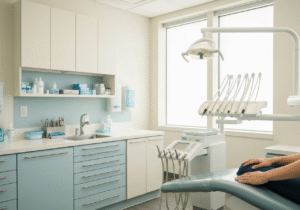
The first step in our pediatric dental fear solutions involves the environment itself. When you walk into a pediatric-focused practice, it shouldn’t look or smell like a hospital. We design our spaces to be warm, colorful, and inviting. From the toys in the waiting room to the cartoons playing above the dental chair, every element is chosen to distract and relax the child.
This “distraction therapy” is not just about decoration; it is a clinical tool. When a child’s brain is engaged with a favorite movie or a fun game, their pain threshold actually increases, and their anxiety levels drop. We transform the sterile clinical setting into a place of curiosity and fun.
Behavioral Management Techniques: The “Tell-Show-Do” Method
One of the most effective tools in my arsenal is communication. We never rush a child. Instead, I use a technique widely recognized in pediatric dentistry called “Tell-Show-Do.” It is simple, respectful, and incredibly effective in building trust.
- Tell: First, I explain exactly what I am going to do using kid-friendly language. I might call the suction straw “Mr. Thirsty” or the dental explorer a “tooth counter.”
- Show: Next, I show the child the instrument. I might let them touch it or demonstrate it on a model or even on their fingernail so they can see it isn’t scary.
- Do: Only after the child understands and feels comfortable do I proceed with the actual procedure.
This method removes the fear of the unknown. By predicting what happens next, the child feels a sense of control over the situation. Feeling in control is the antidote to anxiety.
The Role of Positive Reinforcement
I am a firm believer in the power of praise. throughout the appointment, my team and I constantly reinforce good behavior. We use specific praise, such as “You are doing such a great job keeping your mouth open like a hippo!” rather than generic statements. This helps the child understand exactly what they are doing right.
At the end of the visit, the reward—whether it’s a sticker, a small toy, or just a high-five—serves as a positive memory anchor. When the child looks back on the appointment, they remember the pride of earning a reward rather than the fear of the procedure. This positive association is crucial for future visits.
Data Point: The Prevalence of Dental Anxiety
It is helpful to know just how common this issue is so you don’t feel like you are failing as a parent. According to research published by the National Institutes of Health, approximately 10% to 20% of children and adolescents experience significant dental fear and anxiety. This statistic highlights that this is a widespread public health issue, which is why we have developed such specific professional protocols to handle it.
Advanced Solutions: Sedation Dentistry
Sometimes, despite our best behavioral efforts, a child’s anxiety is simply too high, or the procedure required is extensive. In these cases, pharmacological pediatric dental fear solutions are a safe and compassionate option. I want to emphasize that sedation is not about “knocking a child out” unnecessarily; it is about facilitating a safe treatment where the child forms no traumatic memories.
Nitrous Oxide (Laughing Gas)
This is the most common mild sedative we use. It is a sweet-smelling gas that the child breathes through a small mask. It doesn’t put them to sleep; it simply makes them feel floaty, happy, and relaxed. The best part about nitrous oxide is that it leaves the system within minutes after we turn it off, allowing your child to return to school or play immediately.
Oral Conscious Sedation
For children who are more apprehensive or have trouble sitting still, we might recommend an oral medication taken before the procedure. This makes the child drowsy and very relaxed. They are still awake and can respond to commands, but they likely won’t remember much of the appointment. This is excellent for preserving a positive attitude toward future dental care.
General Anesthesia: For Complete Peace of Mind
In rare cases where a child has extreme phobia, special needs, or requires complex surgery, general anesthesia may be the best route. This is performed in a hospital setting or a specialized center with an anesthesiologist present. The child sleeps through the entire procedure and wakes up with their dental work completed. While this is a last resort, it allows us to reset the child’s oral health without any emotional trauma.
Pain-Free Technology
A massive part of dental fear is the fear of pain, specifically from needles. Technology has changed the game here. In my practice, we utilize topical anesthetic gels that numb the gum tissue effectively before any injection is given. We also use techniques to mask the sensation of the injection itself.
Furthermore, the evolution of laser dentistry allows us to treat certain cavities without drills or needles at all. Lasers are quiet and precise, removing the vibration and high-pitched noise that triggers anxiety in many patients. Utilizing these high-tech tools is part of our commitment to providing gentle care.
Data Point: The Impact of Early Intervention
Addressing these fears early is critical for long-term health. Studies indicate that individuals who suffer from dental anxiety in childhood are significantly more likely to avoid dental care as adults, leading to a 20-30% increase in the risk of severe periodontal disease and tooth loss later in life. By investing in pediatric dental fear solutions now, we are protecting your child’s smile for decades to come.
How Parents Can Help at Home
While my team and I have many tools at the office, the preparation starts at home. You are the most influential person in your child’s life, and your attitude sets the tone. Here are some strategies I recommend to parents:
- Watch Your Language: Avoid using words like “pain,” “shot,” “drill,” or “hurt.” Even saying “It won’t hurt” puts the idea of pain in their mind. Instead, say, ” The doctor is going to count your teeth and clean them.”
- Role Play: Play dentist at home. Let your child count your teeth or brush a doll’s teeth. This normalizes the concept of someone looking in a mouth.
- Morning Appointments: Schedule visits early in the day when your child is well-rested and less likely to be cranky.
- Stay Calm: If you are nervous, stay in the waiting room if possible, or focus on deep breathing. Your child looks to you to gauge if they are safe.
For more insights on how to prepare your child for their first visit, I recommend reading this article from the American Academy of Children Dentistry (AAPD). It provides excellent resources for parents navigating these early years.
Building a Relationship of Trust
Overcoming dental phobia is rarely a one-time fix; it is a process of building a relationship. I encourage “Happy Visits” for very anxious children. These are appointments where we do nothing clinical. We might just ride in the chair, look at the instruments, count teeth, and get a prize. This teaches the child that coming to my office doesn’t always mean “work” is being done.
Consistency is key. Regular check-ups every six months help the child get used to the routine. It also allows us to catch issues when they are small and painless to fix, rather than waiting for a toothache that requires a scary emergency visit.
The Long-Term Benefit of a Fear-Free Smile
When we successfully implement these pediatric dental fear solutions, the results go far beyond healthy teeth. We are building a child’s self-esteem. Overcoming a fear makes a child feel brave and capable. This confidence spills over into other areas of their life.
I have seen teenagers who were once terrified toddlers come into my office with a swagger, joking with the staff and taking ownership of their oral hygiene. That transformation is why I do what I do. We are not just fixing teeth; we are nurturing people.
Moving Forward Together
If you are struggling with a child who fears the dentist, please know that there is hope. You do not have to force your child through traumatic appointments. By choosing a provider who understands the psychology of anxiety and utilizes modern sedation and behavioral techniques, you can change the narrative.
My goal is to partner with you. Together, we can take the fear out of dentistry and replace it with fun, trust, and health. Your child deserves a smile they are proud of, and they deserve to achieve it without fear. Let us work together to make the dental office a place where your child feels safe, respected, and happy.