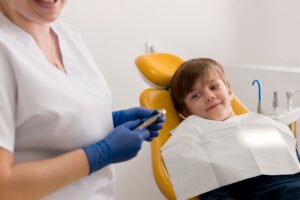
As a dentist, I often hear parents reminisce about their own childhood experiences in the dental chair. Unfortunately, those stories aren’t always happy ones. Many adults remember the sights, sounds, and uncomfortable sensations of traditional dentistry. They remember the metallic taste of film x-rays, the goopy impression trays that made them gag, and the unmistakable sound of the drill. It is only natural that you want something better for your own children.
I am Dr. Sepehr Nassiripour, and I am here to tell you that the world of pediatric dental care has changed dramatically. We have entered a new era where appointments are faster, quieter, and far more comfortable. This is the era of digital dentistry. When we utilize modern dental technology kids actually enjoy their visits. It sounds too good to be true, but I see it happen every day in my practice.
By integrating advanced digital tools into our routine check-ups and treatments, we are not just fixing teeth; we are building a foundation of trust. We are teaching a new generation that taking care of their oral health doesn’t have to be scary. In this post, I want to walk you through the specific technologies we use and explain exactly why they are so beneficial for your little ones.
The Shift from Traditional to Digital Dentistry
You might be wondering what “digital dentistry” actually means. In simple terms, it involves using computer-controlled components and digital devices to perform dental procedures rather than using mechanical or electrical tools alone. For a child, this shift is massive.
In the past, a lot of dentistry relied on analog methods. We used film for x-rays, which took time to develop. We used putty for molds, which was messy. We used visuals that were hard for patients to understand. Today, everything is instant and high-definition. This speed is crucial for pediatric patients. As any parent knows, a child’s patience is a finite resource. By using digital tools, I can reduce the time your child spends in the chair, which significantly lowers their anxiety levels.
The goal is to make the experience seamless. From the moment you walk in, technology aids in diagnosis, treatment planning, and the actual procedure. This isn’t just about having cool gadgets; it is about providing a higher standard of care that prioritizes your child’s physical and emotional comfort.
Digital X-Rays: Enhanced Safety and Speed
One of the most common concerns I hear from parents involves x-rays. It is a valid concern. You want to protect your child from unnecessary radiation. This is where digital radiography changes the game. Unlike traditional film x-rays, digital sensors are incredibly sensitive to x-ray radiation.
Here is a crucial data point for your peace of mind: Digital dental x-rays typically reduce radiation exposure by up to 90% compared to traditional film x-rays. This massive reduction makes them extremely safe for children.
Beyond safety, the process is much faster. I place a small sensor in your child’s mouth, and the image appears on my computer screen almost instantly. There is no waiting for film to develop in a darkroom. This speed is vital for children who might have trouble sitting still. If we need to retake an image because your child wiggled, we can do it immediately without a long pause.
Furthermore, digital images are much clearer. I can zoom in, adjust the contrast, and color-code the image on a large screen. This allows me to spot tiny cavities between teeth or issues with jaw development long before they become painful problems. It allows for early intervention, which usually means less invasive treatments.
Intraoral Cameras: The “Show and Tell” Experience
Children are naturally curious. They want to know what is going on. In the past, the dentist was just a person looking into their mouth while they stared at the ceiling. It was a mysterious and isolating experience for the child. Intraoral cameras have completely solved this problem.
An intraoral camera is a small, wand-like device roughly the size of a pen. It has a tiny, high-definition camera on the tip. I can move this wand around inside your child’s mouth and stream live video to a monitor right in front of them. This turns the dental exam into an interactive “show and tell” session.
When I use this technology, I see a change in my young patients. They become engaged. I can point to a tooth on the screen and say, “See that little sugar bug right there? We need to wash him away.” When a child can see what I see, they understand why they need to brush better or why we need to fix a tooth. It empowers them to take ownership of their oral hygiene.
Benefits of Intraoral Cameras for Kids:
- Reduced Fear: It removes the mystery of what the dentist is doing.
- Education: It helps kids visualize plaque and cavities.
- Trust: It builds a relationship between the doctor and the patient.
- Documentation: We can save these images to track changes over time.
Digital Impressions: No More Goop
If you ever had braces or a crown as a child, you likely remember the impression material. It was a cold, thick putty placed in a metal tray and shoved into your mouth. You had to hold it there for several minutes without swallowing or gagging. For a child with a sensitive gag reflex, this can be a traumatic experience.
Thanks to modern dental technology kids rarely have to endure that anymore. We now use digital scanners. These are handheld wands that take thousands of pictures per second to create a perfect 3D replica of your child’s teeth and gums.
The process is as simple as waving a wand over the teeth. It is clean, fast, and comfortable. If your child needs a break, we stop scanning. When they are ready, we pick up right where we left off. There is no mess to clean up and no bad taste.
The accuracy of these digital impressions is also superior to the old putty method. This means if your child needs a space maintainer or an orthodontic appliance, it will fit better. A better fit means less discomfort and fewer adjustment appointments. It is a win-win for everyone involved.
Laser Dentistry: The “Magic” Wand
Perhaps the most revolutionary advancement in pediatric dentistry is the use of lasers. The sound of the dental drill is a universal trigger for anxiety. The high-pitched whine can make even adults tense up. For kids, that noise can be terrifying. Lasers offer a quieter, gentler alternative.
We use soft tissue and hard tissue lasers for various procedures. Lasers work by using light energy to remove tooth decay or reshape gum tissue. Because the laser is so precise, it does not cause the same vibration and heat as a drill. This vibration is what causes a lot of the pain associated with dental work.
Consider this compelling data point: Many laser procedures are so gentle that they do not require local anesthesia (shots). This means your child can often get a cavity filled without a needle and without leaving the office with a numb, droopy lip.
For parents, the benefits of laser dentistry are clear:
- Less Pain: Reduced need for shots and drilling.
- Faster Healing: Lasers sterilize the area as they work, reducing the risk of infection and speeding up recovery.
- Preservation of Tooth Structure: The precision of the laser allows me to remove only the damaged part of the tooth, keeping more of the healthy tooth intact.
- Silence: No scary drilling sounds.
Caries Detection Technology
Detecting cavities (caries) early is the key to preventing pain and infection. Traditionally, dentists used a sharp instrument called an explorer to poke the grooves of the teeth. If the instrument stuck, it meant there was a cavity. However, this method isn’t always 100% accurate, especially for very small cavities hiding deep in the grooves.
Today, I utilize laser fluorescence technology to detect decay. This is a small, pen-like device that scans the surface of the tooth. It measures the reflection of light. Healthy tooth structure reflects light differently than decayed structure. The device gives me a numerical reading that tells me exactly how deep the decay is.
This technology helps us catch cavities when they are microscopic. Often, when we catch them this early, we can treat them with sealants or remineralization therapy rather than fillings. This non-invasive approach is exactly what parents want for their children. It saves you money and saves your child from undergoing a procedure.
The Impact on Dental Anxiety
I cannot stress enough how much these technologies impact a child’s mental state. Dental anxiety is a real issue that follows many people into adulthood. By removing the triggers of anxiety—pain, noise, uncertainty, and discomfort—we are rewriting the narrative.
When a child comes to my office and has a digital scan instead of a gagging impression, or watches a movie while I use a quiet laser instead of a drill, they leave with a smile. They realize that the dentist isn’t a scary person. This positive reinforcement is crucial.
A positive experience in childhood leads to a lifetime of good oral health habits. Children who aren’t afraid of the dentist are more likely to keep up with their check-ups as they grow into teenagers and adults. We are investing in their future well-being.
For more information on how pediatric dentistry standards are evolving to prioritize child comfort and health, I recommend reading resources from the American Academy of Children Dentistry (AAPD). They offer excellent guides for parents on what to expect during visits.
Precision and Long-Term Results
Beyond comfort, digital dentistry offers unmatched precision. When we restore a tooth, we want that restoration to last. Digital imaging and milling allow us to create restorations that fit perfectly. This seals the tooth effectively, preventing bacteria from getting back in underneath the filling or crown.
For children who need orthodontic guidance, digital planning allows us to predict how their jaw and teeth will grow. We can simulate outcomes and plan interventions at the perfect time. This proactive approach often reduces the time a child might need to wear braces later in their teen years.
We also use digital records to track growth. By overlaying digital scans from year to year, I can show you exactly how your child’s mouth is developing. We can see if there is crowding issues developing or if the bite is shifting. This visual data helps us make informed decisions together as a team.
Making the Right Choice for Your Family
As a parent, you have choices when it comes to healthcare providers. When you are looking for a dental home for your child, I encourage you to ask about the technology the office uses. Ask if they offer digital x-rays. Ask if they have intraoral cameras. Ask if they use lasers.
An office that invests in modern dental technology kids love is an office that invests in patient experience. It shows a commitment to safety, comfort, and education. It shows that the dentist understands the unique needs of pediatric patients.
In my practice, I have seen tears turn into curiosity. I have seen fear turn into high-fives. Technology is the bridge that helps us get there. It allows me to be the best dentist I can be, and it allows your child to have the best experience possible.
Looking Ahead
The field of dentistry is moving fast. We are constantly evaluating new tools and software to see if they can improve our care. From 3D printing to Artificial Intelligence that helps diagnose x-rays, the future is bright.
My promise to you is that I will always stay at the forefront of these advancements. Not because I love gadgets, but because I care about your child’s smile. I want them to grow up with healthy teeth and zero dental anxiety.
If you have been hesitant to schedule a dental visit because you are worried about how your child will react, I invite you to experience the difference digital dentistry makes. It is not just about fixing teeth anymore; it is about creating a positive environment where health and technology work hand in hand. Let’s give your child a reason to smile, today and for the rest of their life.