Navigating Dental Care for Your Child in Beverly Hills
As Dr. Sepehr Nassiripour, I have had the privilege of meeting countless families in Beverly Hills who simply want the best for their children. When you are a parent of a child with unique physical, developmental, or emotional requirements, the search for medical providers is not just about checking a box. It is about finding a partner who understands your journey. Finding a dentist is often one of the most stressful tasks on that list.
I wrote this guide to help you navigate the process of finding the right dental home. I want to assure you that a positive, tear-free dental experience is not only possible but it is also what your child deserves. We are moving away from the old days of rigid dentistry and moving toward a model of care that embraces compassion, patience, and specialized training.
What is a Special Needs Children Dentist?
You might be wondering what actually separates a general dentist from a special needs pediatric dentist. This is a very important distinction to make. While general dentists are trained to fix teeth, pediatric dentists undergo an additional two to three years of specialty training after dental school. A significant portion of this residency is dedicated to treating children with special health care needs (SHCN).
In my practice, this means we are trained to understand the medical and behavioral aspects of conditions such as:
- Autism Spectrum Disorder (ASD)
- Down Syndrome
- Cerebral Palsy
- Sensory Processing Disorders
- Severe Anxiety and Dental Phobia
- Epilepsy and Seizure Disorders
When you look for a provider in Beverly Hills, you are looking for someone who sees the child before they see the teeth. We understand that a child with sensory sensitivities might find the dental light overwhelming, or that a child with autism might need a specific routine to feel safe. This is not just “being nice”; it is a clinical approach tailored to ensure safety and success.
The Importance of the “Dental Home” Concept
The American Academy of Children Dentistry (AAPD) recommends establishing a “Dental Home” by age one. For children with special needs, this concept is even more critical. A Dental Home is an ongoing relationship between the dentist and the patient. It allows us to build trust over time, rather than only seeing your child when there is an emergency or pain.
When we establish this relationship early, we can focus on prevention. We know that dental care is the most common unmet health care need among children with special needs. By creating a routine in a familiar environment, we reduce the anxiety surrounding appointments. In Beverly Hills, where we have access to incredible resources, my goal is to ensure that no child feels left behind when it comes to their oral health.
Why Location and Environment Matter
Living or seeking care in Beverly Hills offers distinct advantages. We hold ourselves to an incredibly high standard of care. However, a fancy waiting room is not enough. When you are scouting for a special needs pediatric dentist, you need to look at the environment through your child’s eyes.
Sensory-Friendly Design
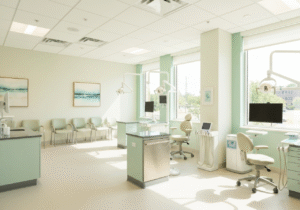
In my experience, the physical space plays a huge role in how an appointment goes. Is the office chaotic and loud, or is it calm? We try to create an atmosphere that minimizes triggers. This might mean having dimmable lights, quiet treatment rooms, or the ability to play a child’s favorite movie on the ceiling to provide a positive distraction.
Accessibility
Physical accessibility is non-negotiable. Our office and equipment are designed to accommodate wheelchairs and other mobility aids comfortably. You should never feel like your child’s equipment is an inconvenience to the dental team. We are here to adapt to you, not the other way around.
Questions You Should Ask Before Booking
I always encourage parents to interview their potential dentist. You are your child’s best advocate. Before you schedule that first visit, pick up the phone and ask specific questions. Here are a few that I believe are essential:
- “What is the doctor’s experience with my child’s specific condition?” If your child has a rare genetic disorder or a specific behavioral trigger, ask if the team has handled it before.
- “Do you offer a desensitization visit?” This is a visit where no work is done. The child simply comes in to meet the team, ride in the chair, and count their teeth. It builds trust without pressure.
- “What are your sedation options?” We will discuss this in more detail later, but knowing the range of sedation available is crucial for safety.
- “Can I stay with my child during the treatment?” In my practice, parents are partners. Transparency is key to making everyone feel comfortable.
The Role of Sedation Dentistry
One of the most common concerns parents bring to me is fear—fear that their child will be traumatized, or fear of the sedation itself. I want to address this openly. For some children with special needs, sitting still for 30 minutes while holding their mouth open is physically or emotionally impossible. That does not mean they are “behaving badly.” It just means they need help.
Safe sedation allows us to perform necessary dental work without causing the child stress or pain. This can range from mild options to more profound solutions:
Nitrous Oxide (Laughing Gas)
This is a mild sedative that helps children relax. It wears off almost immediately after the mask is removed. It is excellent for children with mild anxiety or a strong gag reflex.
Oral Conscious Sedation
This involves a medication taken by mouth before the procedure. It makes the child drowsy and relaxed, though they remain awake. This is often helpful for children who are uncooperative but do not require general anesthesia.
General Anesthesia
For extensive work or for children who cannot tolerate treatment in the chair due to their medical condition, general anesthesia is a blessing. This is done with a board-certified anesthesiologist monitoring the child’s vitals every second. The child sleeps through the procedure and wakes up with their dental work completed. In Beverly Hills, we work with top-tier medical anesthesiologists to ensure the highest safety protocols are met.
According to a report by the National Institute of Dental and Craniofacial Research, dental care is consistently cited as one of the top health challenges for individuals with developmental disabilities. Utilizing safe sedation bridges this gap, ensuring these children receive the same quality of care as their peers.
Preparing for the First Visit
Success starts at home. As a dentist, I can do my part in the office, but the preparation you do at home is invaluable. I always suggest avoiding words that might cause fear, such as “needle,” “hurt,” or “drill.” Instead, tell your child we are going to “count their teeth” and “make them sparkle.”
Visual Supports and Social Stories
Many of my patients with autism benefit greatly from social stories. These are short descriptions or picture books that explain what will happen. Show them pictures of the dental office (most of us have these on our websites). Walk them through the steps: “First we check in, then we sit in the big chair, then the dentist counts our teeth.”
Timing is Everything
You know your child’s rhythm better than anyone. Schedule the appointment during their best time of day. If your child is usually cranky before a nap or overstimulated after school, let’s avoid those times. A morning appointment is often best because the child is well-rested and has not had all day to worry about the visit.
Addressing Behavioral Challenges with Compassion
I want you to know that I never judge a parent or a child based on behavior in the dental chair. We expect some resistance; it is a natural response to a new environment. A skilled special needs pediatric dentist utilizes behavior guidance techniques to help the child cope.
One common method is “Tell-Show-Do.” I tell the child what I am going to do (“I’m going to use this little brush to tickle your tooth”), I show them on their finger or a toy, and only then do I do the procedure. For non-verbal children or those with cognitive delays, we rely heavily on positive reinforcement, gentle touch, and a calm voice tone.
The Impact of Poor Oral Health on General Health
It is easy to push dental care to the bottom of the list when you are managing therapies, specialist visits, and medications. However, oral health is the gateway to the body. Untreated gum disease or cavities can lead to infections that affect the whole system. This is particularly risky for children with congenital heart defects or compromised immune systems.
Data Point: Research indicates that approximately 1 in 6 children in the United States have one or more developmental disabilities. This is a significant portion of our population that requires adapted care protocols to maintain their systemic health. Ignoring dental hygiene can lead to pain that the child may not be able to verbalize, resulting in behavioral changes, sleep issues, or eating difficulties.
Building a Long-Term Partnership
In Beverly Hills, we are fortunate to have a community that values health and wellness. My philosophy is that every child, regardless of ability, has the right to a healthy smile. When you choose a dentist, you are choosing a partner for the next 18 years of your child’s life.
We work closely with your child’s other medical providers. If your child has a pediatrician, a speech therapist, or an occupational therapist, we are happy to coordinate care. For example, we often work with occupational therapists to help parents with tooth-brushing techniques that accommodate sensory aversion.
Home Care Tips for Parents
The work we do in the office needs to be supported by a routine at home. I know that brushing a resistant child’s teeth can feel like a wrestling match. Here are a few strategies that might help:
- Specialized Toothbrushes: For children who cannot sit through a full two minutes of brushing, consider a three-sided toothbrush that cleans the front, back, and top of the teeth simultaneously.
- Taste and Texture: Sometimes the issue is the toothpaste. The strong mint flavor can be “spicy” or painful for sensory-sensitive kids. Try unflavored or fruit-flavored varieties.
- Music and Distraction: Play a favorite song that lasts two minutes. Brushing stops when the music stops.
- Assisted Brushing: Even older children with special needs may lack the manual dexterity to brush effectively. It is perfectly okay for you to help them brush to ensure plaque is removed.
Financial Considerations and Insurance
Navigating insurance for special needs dentistry can be complex. Some procedures, especially those involving sedation or hospital dentistry, may have different coverage rules. In our office, we believe in total transparency. We help you understand your benefits and provide detailed treatment plans before we begin. We also discuss the medical necessity of our procedures, which can sometimes help in utilizing medical insurance for certain aspects of care, depending on the policy.
Your Next Steps
If you are in Beverly Hills or the surrounding Los Angeles area, finding a special needs pediatric dentist is the first step toward securing your child’s oral health future. Please do not wait until your child is in pain. A preventative visit is much easier, faster, and more positive than an emergency extraction.
I hope this information has empowered you to take that next step. You are doing a wonderful job advocating for your child, and we are here to support you. We invite you to call, ask questions, and visit the office to see if we are the right fit for your family. Together, we can make the dental office a place of safety, health, and even a few smiles.