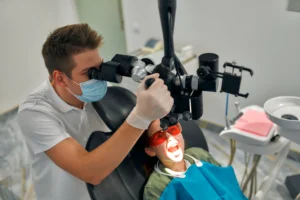
As a pediatric dentist, I have witnessed a specific scene play out in my waiting room more times than I can count. A parent walks in, looking just as anxious as the child hiding behind their leg. I can see the worry in the parent’s eyes and the genuine fear in the child’s body language. If this sounds familiar to you, I want you to know two things immediately: you are not alone, and it does not have to be this way.
I am Dr. Sepehr Nassiripour, and I have dedicated my career to changing the narrative surrounding children’s oral health. One of the most common questions I receive is from parents asking how to handle a child who is absolutely terrified of the dentist. It is a valid concern. A bad experience early in life can lead to dental avoidance well into adulthood. However, with the right approach, patience, and a compassionate environment, we can turn those tears into high-fives.
In this guide, I want to walk you through exactly how we handle dental anxiety and how we partner with you to create a positive foundation for your child’s health.
Understanding the Root of Dental Anxiety
Before we can fix the fear, we have to understand where it comes from. For many children, the dentist’s office represents a loss of control. They are asked to lie back in a chair, open their mouths, and allow a stranger to use strange tools inside. It is a sensory experience that can be overwhelming. There are bright lights, new smells, and unfamiliar noises.
According to research published by the National Institutes of Health (NIH), dental anxiety affects approximately 10% to 20% of the population, but it is significantly more prevalent in children. This data point highlights that your child’s reaction is not “bad behavior.” It is a biological response to an unknown situation. My job is to make that unknown situation feel safe, predictable, and even fun.
When a child is scared, their “fight or flight” response is activated. Reasoning with them in that moment is difficult. That is why our office focuses on preventing that response from triggering in the first place. We don’t just treat teeth; we treat the whole child.
The Concept of a Fear Free Dentist
You may have heard the term fear free dentist thrown around, but what does it actually mean in practice? To me, being a fear free dentist isn’t just a marketing slogan; it is a clinical philosophy. It means we design every aspect of our practice to reduce stress triggers.
This approach starts the moment you walk through our doors. A sterile, cold, clinical environment smells and feels like a hospital. That triggers anxiety. Instead, we aim for an environment that feels welcoming and warm. We use colors, toys, and a friendly demeanor to signal to the child that this is a safe place to play, not a scary place to endure.
The “fear free” methodology relies heavily on psychology. We understand that pain is often subjective and heavily influenced by fear. If a child expects to be hurt, a simple touch can feel painful. By removing the fear, we actually reduce the physical sensation of discomfort. This is the cornerstone of modern pediatric dentistry.
Our Communication Strategy: The Tell-Show-Do Method
One of the most effective tools in my arsenal is a technique called “Tell-Show-Do.” It is the gold standard in pediatric dental care, and it works wonders for anxious children. It eliminates the fear of the unknown by making everything predictable.
- Tell: First, I explain exactly what I am going to do. However, I use age-appropriate language. I never say “needle,” “drill,” or “extract.” Instead, we might talk about “sleepy juice,” “Mr. Bumpy,” or “wiggling a tooth.”
- Show: Next, I show the child the tool or the process. If I am going to use the air syringe, I blow a little air on their hand first so they can feel that it is just a tickle. If we are using a spinning brush, I let them touch it while it’s off, or spin it on their fingernail so they feel the vibration.
- Do: Only after the child understands and gives me permission do we proceed with the procedure.
This method gives the control back to the child. They are no longer passive participants; they are part of the team. When they realize that “Mr. Thirsty” (the suction straw) just makes a funny noise and drinks water, the fear evaporates.
Desensitization and Baby Steps
For children with severe anxiety, we don’t rush. If a child is terrified, forcing them through a cleaning on the first visit is a recipe for disaster. I am perfectly happy to schedule a “happy visit” first.
During a happy visit, we might just count their teeth while they sit on their parent’s lap. We might just ride up and down in the chair. We celebrate these small victories. If your child opens their mouth for ten seconds, we praise them as if they just won a gold medal. This positive reinforcement rewires the brain to associate the dentist with praise and accomplishment, rather than fear.
Pain Management and Comfort Technology
We cannot talk about being a fear free dentist without discussing the physical aspect of dentistry. The fear of pain is real, and we take it very seriously. Modern dentistry has come a long way, and we utilize the best technology to ensure comfort.
Topical Anesthetics
Before we ever do anything that might pinch, we use high-strength topical gels. These gels numb the gum tissue effectively. We call it “sleepy jelly.” For many procedures, this is all that is needed to make the injection of local anesthesia painless. In fact, many children don’t even realize they’ve had a “shot” because we are so skilled at disguising the sensation.
Distraction Techniques
The brain can only focus on so many things at once. If a child is watching their favorite cartoon on a ceiling-mounted TV, their brain is occupied. We also use conversation as a distraction. I might ask a child to count the ceiling tiles, or tell me about their favorite superhero while I work. By the time they finish their story, the procedure is often done.
The Role of Sedation Dentistry
Sometimes, despite our best efforts with behavioral techniques, a child’s anxiety is simply too high, or the amount of work required is too extensive to expect them to sit still. In these cases, sedation is a safe and humane option.
Nitrous oxide, commonly known as “laughing gas,” is a fantastic tool. It is a sweet-smelling gas that helps the child relax. They remain awake and responsive, but they feel a sense of well-being and reduced anxiety. The effects wear off within minutes of breathing normal oxygen, so there is no grogginess afterward.
For more complex cases, we can discuss deeper sedation options. The goal is always the same: to complete the necessary health work without traumatizing the child. We want them to wake up with healthy teeth and no memory of stress.
How Parents Can Help at Home
I often tell parents that the appointment actually begins at home, days before you ever step into my office. Your attitude as a parent is the single biggest predictor of how your child will react. Children are incredibly perceptive; they pick up on your subtle cues.
Here are several strategies you can use to prepare your child:
1. Watch Your Language
Avoid using words that trigger fear. Never say things like, “If you don’t brush, the dentist will pull your teeth,” or “It won’t hurt.” Saying “it won’t hurt” actually introduces the concept of pain where the child might not have been thinking about it. Instead, say, “The dentist is going to check your smile and make your teeth shiny.”
2. Play Dentist
Role-play at home. Let your child be the dentist and count your teeth. Then, swap roles. Use a toothbrush or a spoon to count their teeth. This mimics what I will do in the office and makes the physical sensation familiar.
3. Be Honest, but Brief
If your child asks if they will get a shot, be careful. You can say, ” The doctor might use some sleepy juice to put your tooth to sleep so he can fix it.” Leave the technical details to me. I have specific ways of explaining things that are non-threatening.
The Importance of Early Intervention
Waiting until a child has a toothache to visit the dentist is one of the main causes of dental fear. If the first time a child sees me is when they are already in pain, they will associate me with that pain. This is why the American Academy of Children Dentistry recommends a dental home be established by age one.
According to the Centers for Disease Control and Prevention (CDC), cavities are one of the most common chronic diseases of childhood, yet they are largely preventable. A second data point to consider is that children with poor oral health are three times more likely to miss school due to dental pain. By starting visits early, when no work needs to be done, we build a relationship of trust. The child learns that I am a friend, not a foe.
You can read more about the importance of early dental visits and managing anxiety on this excellent resource from Healthline.
Creating a Positive Cycle
When we successfully manage a fearful child, something magical happens. They get out of the chair, realize they survived, and they feel proud. We reinforce this immediately. We have a treasure chest of prizes, stickers, and plenty of verbal praise.
This pride builds resilience. The next time they come in, they remember the prize and the high-five, not the fear. Over time, the anxiety diminishes until it disappears completely. I have patients who used to cry in the parking lot who now run through the front door to show me a loose tooth. That transformation is the best part of my job.
My Promise to You
I know that trusting someone with your terrified child is difficult. I want to reassure you that I treat every patient as if they were my own family. We do not use force; we use compassion. We do not rush; we take our time.
If you are looking for a fear free dentist, you are looking for a partner in your child’s health. We are prepared to handle the tears, the refusal to open mouths, and the anxiety. We have the training, the tools, and the temperament to handle it all.
Your child’s oral health is a journey, not a sprint. If the first visit is just walking into the lobby and meeting the staff, that is a success. If the second visit is just sitting in the chair, that is a success. We will work at your child’s pace.
It is never too late to change your child’s relationship with dentistry. Whether they have had a bad experience elsewhere or are just naturally anxious, we can help reset the board. We invite you to reach out, discuss your child’s specific fears with us beforehand, and let us create a customized plan to make their smile healthy and their heart happy.
Let’s work together to ensure that your child grows up with a healthy smile and, more importantly, a healthy attitude toward maintaining it. I look forward to meeting you and your little one soon.