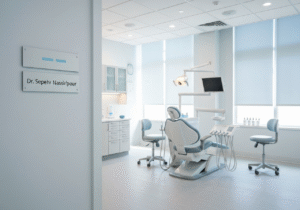
Visiting the dentist should not be a source of fear. For many people, a dental office is associated with loud noises, bright lights, and invasive sensations. As a dental professional, I know that oral health is vital for your overall well-being, but I also understand that the environment in which we treat you matters just as much as the treatment itself. That is why I, Dr. Sepehr Nassiripour, have dedicated significant effort to transforming the dental experience into something calming, empowering, and positive.
I am proud to introduce you to our approach to sensory-friendly dentistry. Through our specially designed Quiet Room and our customizable Comfort Menu, we are changing the narrative around dental care. We believe that by reducing sensory overload and giving you control over your environment, we can help you achieve a healthy smile without the stress.
Understanding the Need for a Calmer Approach
To understand why we created these amenities, we first have to look at why the dentist’s office can be difficult for so many. Traditional dental clinics are high-stimulation environments. There is the high-pitched sound of suction, the vibration of polishers, the glare of overhead operating lights, and the distinct smells of clinical materials.
For a neurotypical person, these might be mild annoyances. However, for individuals with sensory processing disorder (SPD), autism, PTSD, or high anxiety, these inputs can trigger a “fight or flight” response. When the brain cannot filter out these intense sensations, a routine cleaning can feel overwhelming or even painful.
It is important to recognize how common these feelings are. According to recent medical data, approximately 36% of the population suffers from dental anxiety, with a significant portion of that group citing sensory triggers as a primary reason for avoiding care. My goal is to serve that portion of the community. I want to ensure that no one neglects their health simply because the environment feels unsafe.
What is Sensory-Friendly Dentistry?
Sensory-friendly dentistry is not a specific medical procedure; rather, it is a philosophy of care. It is about adapting the environment to meet the patient’s needs, rather than forcing the patient to adapt to a rigid clinical setting. It involves being mindful of the five senses—sight, sound, touch, smell, and taste—and actively working to soothe them.
At our practice, we have moved beyond just “being gentle.” We have engineered our space and our protocols to support patients who experience the world more intensely. This applies to children who are still learning to regulate their emotions, as well as adults who have carried dental fears for decades.
Introducing Our Quiet Room
The centerpiece of our sensory-friendly initiative is our Quiet Room. I realized early on that an open-bay floor plan, where you can hear the drill from the next chair over, is not conducive to relaxation. The Quiet Room is a private, enclosed operatory designed specifically to minimize external stimuli.
Controlled Lighting
In a standard dental room, the lights are harsh and fluorescent. While we need bright light to work on teeth, we do not need it shining in your eyes when we aren’t working. In the Quiet Room, we utilize dimmable lighting features. We can turn off the overhead fluorescent buzzy lights and rely on softer, ambient lighting or natural light where possible. When I need to inspect your teeth, I use a directed headlamp that illuminates only your mouth, keeping the rest of your field of vision darker and more relaxing.
Soundproofing and Acoustics
Noise is often the number one trigger for dental anxiety. The Quiet Room is built with sound-dampening materials to block out the hustle and bustle of the front desk and other treatment areas. When the door is closed, you enter a sanctuary. We play soft, low-tempo music that is proven to lower heart rates, or if you prefer, we can aim for near-silence. This acoustic control allows us to communicate clearly without raising our voices, creating a much more intimate and calm atmosphere.
Minimalist Visuals
Clutter creates visual noise. We have designed the Quiet Room with a minimalist aesthetic. Medical equipment is tucked away when not in use. The colors on the walls are muted earth tones—blues, greens, and grays—which psychology tells us are the most calming colors for the human brain. By reducing the visual chaotic input, we help your brain settle down before we even begin the exam.
The Power of Choice: Our Comfort Menu
While the environment is crucial, I believe that the feeling of control is the antidote to anxiety. One of the scariest parts of medical treatment is feeling like things are being done to you. To combat this, we developed our Comfort Menu.
The Comfort Menu is exactly what it sounds like. Before your appointment begins, you will be presented with a menu of amenities that you can choose from to curate your experience. You can select one, none, or all of them. Here is a look at what we offer and why it works.
Weighted Blankets
This is one of our most popular items. A weighted blanket provides what occupational therapists call “deep pressure therapy.” The weight of the blanket simulates the feeling of a firm hug. This input increases dopamine and serotonin (the feel-good hormones) while reducing cortisol (the stress hormone). For a patient with sensory processing disorder, a weighted blanket can provide the necessary proprioceptive input to help them feel grounded and secure in the dental chair.
Noise-Canceling Headphones
If the sound of the polisher or the ultrasonic cleaner bothers you, you can simply tune it out. We offer high-quality noise-canceling headphones. You can connect them to your own device to listen to your favorite podcast or playlist, or we can provide calming nature sounds. By replacing clinical noise with a sound you enjoy, you shift your focus away from the procedure.
Fidget Spinners and Stress Balls
Anxiety often manifests as physical energy. If your hands are restless, your body becomes tense. We provide a selection of fidget tools. Squeezing a stress ball or spinning a fidget toy gives your hands a job to do. This distraction technique is incredibly effective because it diverts a portion of your brain’s processing power to your hands, leaving less bandwidth for processing pain or fear signals.
Dark Sunglasses
Even with our dimmable lights, the operating light is bright. We provide comfortable, dark-tinted sunglasses to every patient who wants them. This acts as a physical barrier between you and the clinical world, helping you feel less exposed.
Neck Pillows and Warm Towels
Physical comfort prevents tension headaches. We offer supportive neck pillows to ensure your spine is aligned while you recline. After your treatment, we offer a warm, lavender-scented towel. This spa-like touch signals to your body that the “hard part” is over and helps you leave the office feeling refreshed rather than exhausted.
Who Benefits from These Amenities?
You might be reading this and thinking, “I don’t have a diagnosis, so is this for me?” The answer is a resounding yes. While we designed these protocols with neurodivergent patients in mind, they benefit absolutely everyone.
However, specific groups find these accommodations life-changing:
- Individuals with Autism and SPD: Research from the STAR Institute suggests that at least 1 in 6 children has sensory processing difficulties that affect their daily life. For these patients, our Quiet Room isn’t a luxury; it is a necessity for accessing healthcare.
- Patients with PTSD: For survivors of trauma, the loss of control and invasion of personal space at the dentist can be triggering. Our focus on consent and the Comfort Menu helps restore that sense of agency.
- High-Stress Professionals: If you have a stressful job, the last thing you want is a stressful dental visit. Many of our adult patients view the Quiet Room as a chance to decompress during their busy day.
- Children: Setting a positive tone early in life prevents dental phobia in adulthood. When a child associates the dentist with watching cartoons in a weighted blanket rather than pain, we create a lifelong healthy patient.
For more in-depth information on how sensory challenges affect daily life and healthcare, I recommend reading this article from the STAR Institute for Sensory Processing. They are a leading authority on the subject and provide excellent resources for families.
The “Tell-Show-Do” Technique
Alongside our Quiet Room and Comfort Menu, I utilize a behavioral technique called “Tell-Show-Do.” This is vital for our sensory-sensitive patients.
First, I Tell you exactly what I am going to do. I use simple, non-threatening language. For example, instead of saying “I’m going to inject anesthetic,” I might say, “We are going to put the tooth to sleep with some sleepy juice.”
Next, I Show you the instrument. If I am using the air/water syringe, I will squirt a little water on your hand so you can feel the temperature and pressure before it goes near your mouth.
Finally, I Do the procedure exactly as I described. There are no surprises. This builds trust. When you know exactly what sensation is coming next, the anxiety of anticipation disappears.
Your First Visit: What to Expect
If you are interested in utilizing our sensory-friendly options, I encourage you to mention this when you book your appointment. You do not need a formal medical diagnosis to request the Quiet Room or the Comfort Menu. We believe comfort is a universal right.
When you arrive, a member of our team will greet you warmly. We will not rush you. If you need a few minutes to acclimate to the waiting area, that is perfectly fine. We will present you with the Comfort Menu and let you select your items before you even sit in the dental chair.
During the exam, we establish a “stop signal.” Usually, this is raising your left hand. If you raise your hand, I stop immediately. No questions asked. This ensures that you remain the boss of your own body throughout the entire appointment.
Commitment to Inclusive Care
I entered the field of dentistry to help people, not to cause them distress. It became clear to me early in my career that clinical excellence is not enough if the patient is terrified the entire time. By integrating sensory-friendly practices, we are seeing patients who haven’t seen a dentist in ten years finally getting the care they need.
The feedback has been incredibly moving. We have had parents cry tears of relief because their child got through a cleaning without a meltdown for the first time. We have had adults tell us they actually slept well the night before their appointment because they knew they had the Comfort Menu waiting for them.
At our practice, we are constantly learning and evolving. We listen to your feedback to refine our Comfort Menu and improve our Quiet Room. We treat the person, not just the teeth. Your emotional and sensory well-being is as much my responsibility as treating a cavity.
If you have been avoiding the dentist due to sensory issues, anxiety, or fear, I invite you to try a different kind of experience. We are ready to welcome you into a space where your comfort comes first, where the lights are low, the blankets are heavy, and your smile is in safe hands. Please reach out to us to schedule a consultation in our Quiet Room. We look forward to meeting you and helping you smile with confidence.