As a dental professional, there is nothing quite like seeing young athletes discover their passion for sports. Whether it is scoring that first goal in soccer, making a basket, or tackling a dummy in football practice, the confidence sports build in children is incredible. However, as Dr. Sepehr Nassiripour, I also see the other side of youth athletics: the injuries. While we often worry about twisted ankles or scraped knees, dental injuries are surprisingly common and can be permanent.
When parents come into my office, one of the most frequent questions I get during the sports season is about protection. Specifically, parents want to know if they really need to invest in a custom-made appliance or if the plastic ones from the sporting goods aisle are enough. It is a valid question. With growing feet requiring new cleats every season, budgets can be tight. However, when it comes to your child’s smile, the equipment you choose matters.
Today, I want to dive deep into the differences between custom-fitted guards and store-bought options. My goal is to help you make an educated decision about choosing the right pediatric sports mouthguard for your young athlete.
The Reality of Youth Sports Injuries
Before we compare the products, we have to understand the risk. Many parents assume that mouthguards are only necessary for “contact” sports like football, hockey, or boxing. However, I often treat dental trauma from basketball, soccer, gymnastics, and even skateboarding. A stray elbow, a fall against a hard surface, or a collision with another player can happen in seconds.
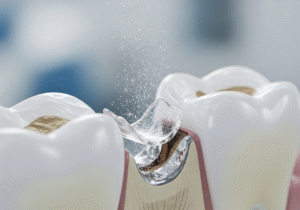
When a child takes a hit to the face, the energy has to go somewhere. Without a buffer, that energy travels directly through the teeth and into the jawbone. This can result in chipped teeth, root fractures, knocked-out teeth (avulsion), or even soft tissue injuries where the teeth cut through the lips and cheeks.
According to the National Youth Sports Safety Foundation, athletes who do not wear mouthguards are 60 times more likely to sustain damage to their teeth. That is a staggering statistic. It tells us that the simple act of wearing protection dramatically shifts the odds in your child’s favor. The question then becomes: how much protection do they actually get from the different types of guards available?
Option 1: The Store-Bought Mouthguard
We have all seen them hanging on the racks at the local sports store. They are usually brightly colored, inexpensive, and promise a quick fix. Generally, these fall into two categories: the Stock Guard and the Boil-and-Bite.
The Stock Mouthguard
These are “ready-to-wear” plastic trays. You buy them, take them out of the package, and put them in your mouth. In my professional opinion, these offer the least amount of protection. Because they are not adjustable, the fit is rarely secure. To keep them in place, your child often has to bite down constantly, which can interfere with breathing and speaking.
The Boil-and-Bite Mouthguard
This is the most common store-bought option. You place the thermoplastic material in boiling water to soften it, then have your child bite into it to mold the shape. While this offers a better fit than stock guards, there are significant limitations.
The main issue I see with boil-and-bite guards is the thickness of the material. When a child bites down to mold the plastic, they often bite through the material too deeply. This thins out the plastic exactly where protection is needed most—on the biting surfaces of the teeth. Furthermore, the material used in these mass-produced guards is often not durable enough to withstand heavy impact over time.
Pros of Store-Bought Guards:
- Accessibility: You can buy them anywhere, immediately.
- Price: They are very inexpensive upfront.
Cons of Store-Bought Guards:
- Poor Retention: They often fall out if the athlete isn’t biting down.
- Breathing Difficulty: The bulkiness can obstruct the airway.
- Communication Issues: It is hard to talk to teammates while wearing one.
- Lower Protection Levels: Generic shapes do not absorb shock as efficiently as custom fits.
Option 2: The Custom-Fit Mouthguard
As a dentist, I advocate for custom protection because I understand the anatomy of the mouth. A custom pediatric sports mouthguard is fabricated specifically for your child. The process involves taking a precise impression or a digital scan of your child’s teeth. From this model, we create a guard using high-grade materials that are vacuum-formed or pressure-laminated over the model.
Precision and Comfort
The difference in fit is immediate. Because it is made for your child’s unique dental arch, it stays in place without them having to clench their teeth. It essentially “locks” gently onto the teeth. This is crucial for compliance. If a mouthguard is comfortable, your child is much more likely to keep it in their mouth during the entire game, rather than chewing on it or sticking it in their helmet.
Oxygen Intake and Performance
This is a factor many parents overlook. When an athlete is running up and down the court or field, they need maximum oxygen intake. Store-bought guards are often bulky and fill up the mouth, forcing the athlete to breathe harder to get air. A custom guard is trimmed precisely to ensure the airway remains open. This allows for normal breathing and clear speech, meaning your child can call out plays or communicate with coaches without removing their protection.
Shock Absorption
The material we use in professional dentistry is designed to absorb and distribute shock. When an impact occurs, a custom guard disperses that energy across the entire surface area of the device, rather than letting it concentrate on a single tooth. This helps prevent fractures and can even reduce the force transmitted to the jaw joint (TMJ).
The “Growing Mouth” Challenge
I know what you are thinking: “Dr. Nassiripour, my child is 10 years old. Their teeth are changing constantly. Why spend money on a custom guard that won’t fit in six months?”
This is a very practical concern. Children dentistry is all about managing growth. Between the ages of 6 and 12, children have a mix of baby teeth and permanent teeth. This is often referred to as the mixed dentition stage. A store-bought guard is rigid in its inability to adapt to this environment.
When we fabricate a custom pediatric sports mouthguard, we can actually plan for this growth. We can block out space in the fabrication process to allow room for erupting teeth. This extends the life of the mouthguard significantly. Furthermore, protecting those new permanent teeth is vital. These are the teeth your child will have for the rest of their life; they do not get a third set.
Additionally, for children wearing braces, a custom guard is almost non-negotiable. A blow to the face while wearing braces can cause severe lacerations to the lips and cheeks from the metal brackets. A custom guard covers these brackets smoothly, protecting both the soft tissue and the orthodontic hardware.
Analyzing the Cost vs. Value
It is undeniable that a custom mouthguard costs more upfront than a boil-and-bite version. However, I always encourage parents to look at the long-term value and the potential cost of *not* having one.
According to data from the American Dental Association, the lifetime cost of rehabilitating a single knocked-out tooth can exceed $10,000 to $20,000. This includes the immediate emergency visit, root canals, crowns, and potentially implants or bridges later in life as the child grows. When you compare the cost of a custom guard to the cost of emergency dental reconstruction, the mouthguard is essentially an inexpensive insurance policy for your child’s smile.
For more information on the importance of facial protection, I recommend reading this article from the American Dental Association on Mouthguards and Dental Safety. It provides excellent resources for parents regarding different types of protectors.
Key Features I Look For in a Good Mouthguard
Whether you choose store-bought or custom, as a dentist, I want to ensure your child is as safe as possible. If you are evaluating a mouthguard, here is a checklist of what it should provide:
- Resilience: It should be tear-resistant and capable of keeping its shape.
- Fit: It should stay in place comfortably without clenching.
- Coverage: It should cover all the teeth and cushion the gums, but not extend so far back that it causes gagging.
- Speech: Your child should be able to say their name clearly while wearing it.
- Breathing: It should not restrict airflow.
If the guard your child is currently using fails any of these tests, it is time to look for a replacement.
Maintenance: Taking Care of the Gear
Regardless of which type of guard you select, hygiene is critical. Mouthguards can become breeding grounds for bacteria if not cleaned properly. I teach my young patients to treat their mouthguard like part of their uniform. It needs to be cleaned after every practice and game.
Here is a simple routine for young athletes:
- Rinse the mouthguard with cool water or a mouth rinse before and after each use. Avoid hot water, as it can warp the shape.
- Clean it with a toothbrush and toothpaste occasionally to remove plaque buildup.
- Store it in a perforated container that allows air circulation. A sealed container can promote mold growth.
- Keep it out of direct sunlight and away from family pets (dogs love the texture of mouthguards!).
Bringing the mouthguard to your child’s regular dental checkups is also a great idea. I can inspect it for wear and tear and ensure it still fits properly as your child grows.
Making the Right Choice for Your Athlete
Every parent wants to protect their child. We buy the best helmets, the most supportive shoes, and the safest pads. We should apply that same standard to oral safety. While store-bought guards are better than nothing, they simply cannot compete with the level of safety, comfort, and performance provided by a custom-fit appliance.
I have seen too many tears in my office due to preventable accidents. I have seen the pain a child goes through when a tooth is fractured, and the anxiety parents feel regarding the costs and procedures to fix it. My goal is to prevent those visits. I want to see your children in my office for their cleaning, telling me about their winning season, with all their natural teeth intact.
Investing in a custom pediatric sports mouthguard is an investment in your child’s confidence and health. It allows them to play fearlessly, knowing they are protected. If you have questions about fitting your child for the upcoming season, or if you are unsure if their current guard is adequate, please reach out. Let’s keep those smiles safe while they play the sports they love.