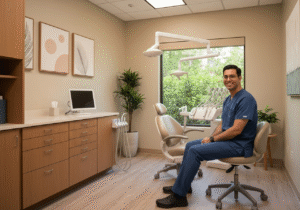
If you walked into a typical medical office, you might expect to see stiff waiting rooms, smell sterile antiseptics, and hear the nervous shuffling of feet. But when you walk into my office, you are more likely to hear laughter, see high-fives, and—perhaps the most surprising sight of all—witness a child giving me or my staff a hug at the end of their appointment.
I am Dr. Sepehr Nassiripour, often known to my little patients simply as “Dr. N.” Over the years, I have realized that being a pediatric dentist is about much more than checking for cavities or polishing enamel. It is about psychology, trust, and creating an environment where fear simply doesn’t have room to grow.
Many parents ask me what the secret is. They want to know how we take a situation that has historically terrified adults and turn it into something children actually look forward to. The answer isn’t magic, although we do use a few tricks. The answer lies in our philosophy of care. We strive to be the fun pediatric dentist that every child deserves, and today, I want to take you behind the scenes to show you exactly how we earn those hugs.
Redefining the Dental Experience
Let’s be honest: the dentist has a bad reputation. For generations, people have associated dental visits with pain, loud noises, and a loss of control. When I started my practice, I knew I wanted to dismantle that reputation entirely. I didn’t just want to treat teeth; I wanted to treat the whole child.
The “Dr. N” difference starts before a child even sits in the chair. It begins with the atmosphere. We have designed our space to feel less like a clinic and more like a play area. When a child walks in, the colors are warm, the energy is high, and the smell of “dentist” is replaced with a clean, fresh scent. We know that children are incredibly perceptive. They pick up on vibes instantly. If the front desk staff is stressed or the waiting room is gloomy, the child’s anxiety spikes before I even say hello.
My goal is to normalize the environment. By removing the clinical intimidation factor, we lower the child’s cortisol levels (the stress hormone) and open the door for a positive interaction. We treat our patients like VIP guests, not just a set of teeth on a schedule.
The Psychology of Fear vs. Fun
Understanding why children are afraid is the first step to making them comfortable. Fear usually stems from the unknown or a lack of control. A child doesn’t know what that metal tool is, and they don’t know if it will hurt. To combat this, we use a method often called “Tell-Show-Do,” but I like to add my own spin to it.
I never surprise a child. Before I do anything, I explain it in language they can understand. I might call the suction tool “Mr. Thirsty” or describe the polisher as a “tickle toothbrush.” I show them how it works on their finger or a stuffed animal first. Once they see that “Mr. Thirsty” just makes a funny noise and tickles their hand, the fear evaporates. They realize they are safe.
We also empower them with control. I tell my patients, “If you want me to stop, just raise your left hand.” giving them an ‘off button’ transforms the dynamic. They are no longer passive participants; they are my partners in the process. This shift is crucial. When a child feels they have a say in what is happening to their body, they relax. And when they relax, we can actually have fun.
The Importance of Early Experiences
It is difficult to overstate how important these early visits are. According to the National Institutes of Health (NIH), dental anxiety affects approximately 10-20% of children and adolescents. If this anxiety isn’t addressed early, it often follows them into adulthood, leading to avoidance of dental care and poor oral health later in life. My mission is to ensure my patients never become part of that statistic.
By positioning myself as a fun pediatric dentist, I am investing in their future health. If a child associates the dentist with high-fives, movies on the ceiling, and cool prizes, they will grow up to be adults who don’t hesitate to book their check-ups. That is the long-term victory.
Speaking Their Language
One of the biggest reasons I connect with kids is that I don’t talk down to them. I talk to them. I ask about their favorite cartoons, their pets, or what they learned in school. I remember these details for their next visit. When I ask a six-year-old how his soccer game went three months after he first told me about it, his eyes light up. He realizes he matters to me.
We also use humor extensively. Distraction is a powerful tool in pediatric dentistry. If I can get a child laughing about a joke or focused on a story I’m telling, they barely notice when I apply fluoride or check a molar. We keep the mood light. You will often hear singing or storytelling coming from our treatment bays.
For parents, this might look like we are just playing around. But every joke and every story is a calculated clinical technique designed to manage behavior and reduce anxiety. It is professional care wrapped in a package of entertainment.
A Team That Cares
I cannot take all the credit for the hugs. The “Dr. N” difference is a team effort. Every hygienist and assistant in my office has been hand-picked not just for their technical skills, but for their personality. You can teach someone how to floss, but you cannot teach them how to be genuinely kind and patient with a crying toddler.
My team understands that patience is our greatest asset. Some appointments take longer than others because a child needs extra time to warm up. And that is okay. We never rush. If we need to spend ten minutes just talking and showing the child the instruments before we even look in their mouth, we do it. Pressuring a child is the fastest way to break trust.
We celebrate every small victory. Did they sit in the chair by themselves? High five! Did they open their mouth wide? Sticker! Did they finish the exam? A trip to the treasure chest! Positive reinforcement floods the child’s brain with dopamine, associating the dental visit with feelings of accomplishment and reward.
Pain-Free Dentistry is a Priority
Of course, all the fun in the world won’t matter if the experience is physically painful. This is where my clinical expertise comes in. I utilize the latest technology and techniques to ensure procedures are as painless as possible. From topical gels that numb the gum before an injection (which we keep out of sight) to quiet electric handpieces that don’t make that scary high-pitched whine, every piece of equipment is chosen for patient comfort.
I am also very gentle. I have spent years refining my touch to be as light as possible. Many times, a child won’t even realize I have given them a shot because I have distracted them and used advanced numbing techniques. When the appointment is over and they realize nothing hurt, the relief is palpable. That relief turns into gratitude, and that gratitude often turns into a hug.
Why “Fun” Matters for Health
Some might wonder if focusing on being a fun pediatric dentist distracts from the serious business of healthcare. I would argue that the “fun” is essential to the healthcare. You cannot treat a child effectively if they are fighting you. A calm, happy child allows me to do my best work. I can see better, I can clean better, and I can diagnose more accurately when the patient is cooperative.
Furthermore, poor oral health has serious consequences for a child’s life outside the dentist’s office. Data shows that dental issues are a leading cause of school absenteeism. In fact, studies indicate that poor oral health can lead to millions of school hours lost each year across the country. By making dentistry approachable, we ensure kids keep their appointments, keep their teeth healthy, and stay in the classroom learning.
For more information on the impact of oral health on children’s overall well-being, I recommend reading resources from the American Academy of Children Dentistry (AAPD). They provide excellent guidelines for parents on why establishing a “dental home” early is so vital.
Partnering with Parents
While the kids are my focus, the parents are my partners. I know that if a parent is anxious, the child will be too. Part of the “Dr. N” difference is making sure you, as the parent, feel informed and relaxed. I take the time to explain exactly what I am seeing and what I recommend. I use digital imaging to show you what is happening inside your child’s mouth so there is no mystery.
I also coach parents on how to talk about the dentist at home. I encourage you to avoid using words like “pain,” “hurt,” or “shot” when preparing your child for a visit. Instead, tell them we are going to count their teeth and make them sparkle. When parents and the dental team are on the same page, the child feels surrounded by a safety net of trusted adults.
Tips for a Tear-Free Visit
If you are preparing for your child’s first visit, or if you are looking for a new dental home, here are a few things we recommend to set the stage for success:
- Start Young: The AAPD recommends the first visit by age one or when the first tooth appears. This allows the child to get used to the environment before any real work needs to be done.
- Role Play at Home: Take turns being the dentist and the patient with your child. Count their teeth and let them count yours.
- Keep it Positive: Treat the visit like a fun outing, similar to going to the park or a friend’s house.
- Bring a Comfort Item: If your child has a favorite stuffed animal or blanket, bring it along! We love meeting their fuzzy friends.
The Reward of the Hug
At the end of the day, the metrics that matter most to me aren’t just cavity-free X-rays. It is the reaction of the child when they hop out of the chair. When a child who walked in hiding behind their mother’s leg walks out with a balloon, a giant smile, and runs back to give me a squeeze around the knees, I know I have done my job.
That hug signifies trust. It means “I was scared, but you kept me safe.” It means “You didn’t hurt me.” It means “I like it here.”
Being a pediatric dentist is a privilege. Parents trust me with their most precious treasures. I take that responsibility seriously, but I don’t take myself too seriously. I am happy to wear the silly hats, make the funny voices, and talk about superheroes all day long if it means a child grows up with a healthy smile and a happy heart.
Join Our Dental Family
The “Dr. N” difference isn’t just a marketing slogan; it is the heartbeat of my practice. It is a commitment to kindness, patience, and excellence. We believe that going to the dentist should be the highlight of a child’s week, not the low point.
If you are looking for a fun pediatric dentist who views your child as a person first and a patient second, I invite you to come visit us. Let us show you how we turn anxiety into confidence. We can’t wait to meet you, and who knows? We might just earn a hug from your child, too.