As a dental professional, I often see parents standing at a crossroads when it comes to their child’s oral health. One of the most common questions I hear in my practice is, “Can’t I just take my child to my own dentist?” It is a valid question. After all, teeth are teeth, right? Well, not exactly.
While general dentists are incredibly skilled professionals capable of handling a wide range of dental issues, taking your child to a pediatric dentist is similar to taking them to a pediatrician rather than a general practitioner. The anatomy, behavior, and specific needs of a growing child require a unique approach. In this article, I want to walk you through the distinct differences between these two types of providers and explain why choosing the right “dental home” for your little one can set the stage for a lifetime of healthy smiles.
The Educational Journey: More Than Just Dental School
To understand the difference, we have to start with the training. Every dentist, whether general or specialized, completes four years of dental school to earn a DDS (Doctor of Dental Surgery) or DMD (Doctor of Dental Medicine). This provides the foundational knowledge to treat teeth and gums.
However, this is where the paths diverge. A general dentist can begin practicing immediately after dental school. As a pediatric dentist, my journey continued. To earn the title of a specialist, I underwent an additional two to three years of rigorous residency training.
This pediatric dentist specialization focuses entirely on treating infants, children, adolescents, and children with special health care needs. During this residency, we don’t just learn about filling cavities. We study child psychology, growth and development, craniofacial anomalies, and advanced pharmacological management (sedation). This extra schooling prepares us to handle complex diagnostic and surgical procedures that general dentists may not see frequently enough to feel comfortable treating.
The Psychology of Treating Children
If you have children, you know that reasoning with a two-year-old is vastly different from reasoning with an adult. Adults generally understand that they need to sit still and open their mouths to get a tooth fixed. A child, however, may view the dental chair as a spaceship, a torture device, or simply a boring place they want to escape from.
One of the biggest components of my daily work involves behavioral management. My team and I are trained in specific techniques to alleviate anxiety and build trust. We often use a method called “Tell-Show-Do.”
- Tell: I explain what I am going to do in simple, non-threatening language.
- Show: I demonstrate the procedure on a model or a fingernail so the child sees it is not scary.
- Do: I perform the procedure exactly as described.
We also understand the power of positive reinforcement and distraction. A general dentist is trained to treat the tooth; a pediatric dentist is trained to treat the child attached to the tooth. We know how to read body language and identify when a child is becoming overwhelmed before a meltdown occurs. This psychological component is critical because a bad experience at a young age can lead to dental phobia that lasts into adulthood.
An Environment Built for Little Ones
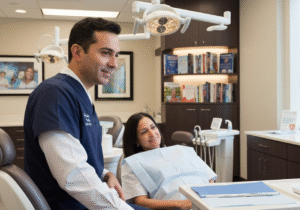
Have you ever walked into a general dental office? It usually feels clinical, calm, and efficient—perfect for adults. Now, picture walking into my office. The difference is usually immediate. From the waiting room to the treatment chair, everything is designed with the child in mind.
Our equipment is physically smaller. We use instruments specially designed for a child’s smaller mouth. This isn’t just about comfort; it is about safety and precision. Using adult-sized tools on a toddler can be difficult and uncomfortable for the patient.
Furthermore, the atmosphere plays a huge role in reducing anxiety. Bright colors, games, and televisions on the ceiling are not just decorations; they are tools of the trade. They provide necessary distractions. When a child is watching their favorite cartoon, they are less focused on the sights and sounds of the dental equipment. This specialized environment signals to the child that this place is “for them,” which significantly lowers their guard and makes the appointment run smoother.
Expertise in Primary Teeth
A common misconception is that baby teeth (primary teeth) don’t matter because they “just fall out anyway.” I cannot stress enough how dangerous this line of thinking is. Primary teeth are essential for proper chewing, speech development, and holding space for the permanent teeth waiting underneath.
If a baby tooth is lost too early due to decay, the surrounding teeth may drift into the empty space. This blocks the permanent tooth from erupting correctly, leading to severe crowding and the need for extensive orthodontic work later in life.
Because of our pediatric dentist specialization, we focus heavily on preventative care specific to developing mouths. This includes:
- Dental Sealants: Protective coatings applied to the chewing surfaces of the back teeth to prevent cavities.
- Fluoride Treatments: Customized based on the child’s risk assessment and local water supply.
- Space Maintainers: Custom-made appliances to hold space open if a baby tooth is lost prematurely.
- Pulp Therapy: Sometimes called a “baby root canal,” this saves a decayed primary tooth rather than extracting it.
According to the Centers for Disease Control and Prevention (CDC), tooth decay is the most common chronic disease of childhood. In fact, about 1 in 5 children aged 5 to 11 years have at least one untreated decayed tooth. This statistic highlights the critical need for specialized providers who are aggressive about prevention and skilled in early intervention.
Handling Growth and Development
Children are in a constant state of flux. Their jaws are growing, their bones are remodeling, and their teeth are moving. As a pediatric dentist, I am essentially the gatekeeper of this growth. I monitor the eruption patterns of teeth and the growth of the jaw to identify potential issues early.
For example, we look for issues like crossbites, overbites, and overcrowding long before all the permanent teeth have come in. We also address oral habits that can distort the shape of the mouth, such as thumb sucking or pacifier use.
General dentists may not always intervene in these habits as aggressively or as early. I offer counseling and positive reinforcement strategies to help children break these habits before they cause permanent skeletal damage. By catching these issues early, we can often utilize “interceptive orthodontics” to guide the growth of the jaw, potentially shortening or even eliminating the need for braces in the teen years.
Care for Children with Special Needs
This is an area of my profession that is very near and dear to my heart. Children with special health care needs—whether physical, developmental, cognitive, or emotional—require a dental team that understands their unique challenges.
Patients with autism, Down syndrome, cerebral palsy, or other conditions may have sensory sensitivities or physical limitations that make a standard dental exam impossible. Part of the pediatric dentist specialization involves extensive training in managing these patients with dignity and compassion.
We are trained to adapt our movements, alter the lighting, change the noise levels, and use specific behavioral guidance techniques to accommodate sensory processing disorders. In some cases, we are also certified to use sedation dentistry or hospital-based general anesthesia to safely treat patients who cannot cooperate due to their condition. Most general dentists simply do not have the training or the facility licensure to offer these options safely.
The Role of Sedation Dentistry
While we always aim to treat children using behavioral techniques, there are times when a child is too young, too fearful, or requires too much extensive work to sit through an appointment while awake. This is where our advanced pharmacological training comes into play.
Children dentists are licensed to offer various levels of sedation, ranging from nitrous oxide (laughing gas) to oral conscious sedation, and even IV sedation with an anesthesiologist. We are trained to monitor a child’s vitals and airway specifically, which differs significantly from monitoring an adult.
Safety is paramount here. Children have different metabolic rates and airway structures than adults. Knowing the precise dosages and having the emergency training to handle rare adverse reactions is a key differentiator between a general practice and a pediatric specialist’s office.
When Is a General Dentist Okay?
I want to be clear: I have many colleagues who are general dentists and do a fantastic job. Many general dentists are comfortable seeing older children or children who are very cooperative and have no dental issues. If your child has a “textbook” mouth, no anxiety, and can sit still for 30 minutes, a general dentist might serve your family well, especially for the convenience of having the whole family at one location.
However, the moment a child develops a cavity, expresses fear, or shows signs of developmental crowding, the expertise of a specialist becomes invaluable. The American Academy of Children Dentistry (AAPD) recommends that a child establishes a dental home by age one. Interestingly, data shows that for every dollar spent on preventive dental care, $8 to $50 can be saved in restorative and emergency treatments. By starting with a specialist, you are investing in prevention that pays off financially and emotionally.
For more detailed information regarding the guidelines on when to bring your child to the dentist, you can review the resources provided by the American Academy of Children Dentistry, which offers excellent guides for parents.
Building a Trusting Relationship
One aspect of my job that I cherish most is the relationship building. Because my office is dedicated solely to kids, we take the time to educate both the parent and the child. We talk about diet, nutrition, and proper brushing techniques in a way that isn’t preachy, but empowering.
When a child comes to my office, I want them to feel a sense of ownership over their health. We use disclosing tablets to show them where the “sugar bugs” are hiding. We let them choose their toothbrush color and their prize at the end. These small touches build a positive association with healthcare.
In a high-volume general practice, the hygienist and dentist are often under pressure to stay on a tight schedule suitable for adults who want to get in and get out. Children operate on their own time. If it takes me ten minutes to talk a child into opening their mouth, I take that time. Forcing a child to proceed before they are ready is what creates dental anxiety. My schedule and my team are structured to allow for that patience.
Making the Right Choice for Your Family
Choosing a healthcare provider is a personal decision. As a parent, you know your child best. If your child is outgoing, compliant, and has perfect teeth, a family dentist is a fine choice. But if you want a provider who has dedicated their entire career to understanding the physiological and psychological nuances of growing children, a pediatric dentist is the answer.
We are the pediatricians of the mouth. We are there to hold your hand through the teething sleepless nights, the first loose tooth, the sports accidents, and the braces years. My goal is not just to fix teeth, but to raise a generation of children who look forward to seeing the dentist and who value their oral health.
The extra years of training, the child-focused environment, and the specialized equipment all come together to create an experience that is safe, effective, and positive. Your child’s smile is precious, and ensuring they have the best possible start in life is what I am here to do.