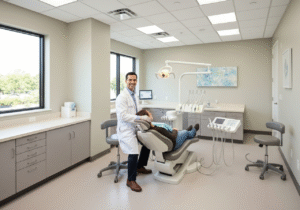
When you think about taking your child to the dentist, what is the first thing that comes to your mind? For most parents, it is usually checking for cavities, counting teeth, and perhaps the hope that their little one behaves well in the chair. While these are certainly parts of the process, my philosophy as Dr. Sepehr Nassiripour goes far beyond looking for sugar bugs. I believe in treating the person, not just the tooth. This is what we call the Whole Child Approach.
In modern medicine, we are learning more every day about how connected every system in the body is. The mouth is not an isolated island; it is the gateway to the rest of the body. It plays a massive role in how a child breathes, sleeps, eats, and grows. By adopting a wider perspective, I can help ensure that your child isn’t just cavity-free, but also thriving physically, emotionally, and developmentally.
Understanding the Whole Child Approach
The Whole Child Approach is a shift away from the traditional “drill and fill” model of dentistry. In the past, if a child had a cavity, the dentist filled it. If teeth were crooked, we waited until the teenage years to put braces on. That was reactive care. What I practice is proactive, functional, and comprehensive care.
When I look into a child’s mouth, I am looking at clues that tell me about their overall systemic health. I am looking at the alignment of the jaws, the position of the tongue, the health of the gums, and the wear patterns on the teeth. These signs can tell me if a child is sleeping poorly, struggling with allergies, or lacking specific nutrients.
This method integrates oral health with general health and emotional well-being. It recognizes that a child’s dental experience can shape their view of healthcare for the rest of their lives. Therefore, my goal is to create an environment where children feel safe, heard, and empowered.
The Mouth-Body Connection
To truly understand this approach, we must accept that oral health is a mirror of the body. Inflammation in the mouth can be a sign of inflammation elsewhere. Issues with jaw development can impact posture and spinal alignment. By addressing the root causes of oral issues, we often alleviate other health struggles a child might be facing.
For example, holistic dental care children receive focuses heavily on prevention through nutrition and habit correction. Instead of just fixing the damage caused by sugar, we look at the diet and digestive health to understand why the teeth are susceptible in the first place.
A significant data point to consider comes from the Centers for Disease Control and Prevention (CDC). They report that dental caries (cavities) are the most common chronic disease of childhood, five times more common than asthma. This statistic tells me that the traditional methods of prevention aren’t working well enough. We need to look deeper into the child’s lifestyle and biology to make a lasting change.
Airway Health and Sleep: The Hidden Pillars
One of the most critical aspects of the Whole Child Approach is airway health. This is something that was rarely discussed in pediatric dentistry twenty years ago, but today, it is at the forefront of my practice.
When a child comes in for an exam, I am checking to see if they are breathing through their nose or their mouth. Nasal breathing is essential for proper development. It filters the air, warms it, and produces nitric oxide, which helps the lungs absorb oxygen. Mouth breathing, on the other hand, can lead to a host of problems.
- Crowded Teeth: When a child breathes through their mouth, the tongue sits low in the floor of the mouth instead of resting on the roof (the palate). The tongue is nature’s expander; without its pressure, the upper jaw becomes narrow, leaving no room for adult teeth to come in straight.
- Sleep Disordered Breathing: Mouth breathing is often a sign of sleep issues. If a child is snoring, grinding their teeth (bruxism), or tossing and turning, they may not be getting the deep, restorative sleep they need.
- Behavioral Issues: Poor sleep mimics symptoms of ADHD. A child who is sleep-deprived isn’t just tired; they are often hyperactive, irritable, and unable to focus at school.
By identifying these issues early—sometimes as early as age two or three—I can intervene. This might involve working with an ENT specialist, a myofunctional therapist, or using specialized appliances to help the jaw grow correctly. This intervention can change the trajectory of a child’s health, preventing the need for extractions or jaw surgery later in life.
The Role of Nutrition and Gut Health
We all know that sugar causes cavities. However, holistic dental care children require goes deeper than just saying “don’t eat candy.” As a dentist, I look at nutrition as the building block for strong enamel and healthy gums.
Modern diets are often soft and processed. This lack of tough chewing means the jaw muscles aren’t working hard enough to stimulate bone growth. I encourage parents to introduce harder, fibrous foods like raw carrots, apples, and quality meats. This “jaw gym” is crucial for facial development.
Furthermore, I look for signs of vitamin deficiencies. For instance, Vitamin D and Vitamin K2 are vital for directing calcium into the bones and teeth. If a child has weak enamel, it might not be a hygiene issue; it might be a metabolic one. We also discuss gut health, as the microbiome in the mouth is the start of the gut. An imbalance in oral bacteria often indicates an imbalance in the digestive system, which can affect the immune system.
Emotional Safety and Dental Anxiety
Treating the “whole child” means treating their mind and spirit, not just their body. Dental anxiety is real, and it often stems from a fear of the unknown or a loss of control. My priority is to establish a relationship based on trust.
I use a technique often called “Tell-Show-Do.” I tell the child what I am going to do in simple, non-threatening language. I show them the instrument or the material. Then, and only then, do I do the procedure. This removes the mystery and fear. We move at the child’s pace.
We also pay close attention to the sensory environment. The sights, sounds, and smells of a dental office can be overwhelming for some children, particularly those with sensory processing sensitivities. By maintaining a calm atmosphere and using positive reinforcement, we help children build confidence.
When a child leaves my office feeling proud of themselves, that is a victory. A child who trusts their dentist is a child who will continue to seek healthcare as an adult. We are building a foundation for a lifetime of healthy habits.
Minimally Invasive Dentistry and Biocompatible Materials
In alignment with the philosophy of holistic dental care children deserve, I focus on using materials and techniques that are safe for their developing bodies. This is often referred to as biocompatible dentistry.
When restorative work is necessary, I choose materials that are non-toxic. We avoid silver mercury fillings (amalgams) and instead use BPA-free composite resins that mimic the natural tooth structure. These materials are not only aesthetically pleasing but also bond to the tooth, allowing us to preserve more of the natural tooth structure during repair.
We also utilize technology to make treatments less invasive. For example, laser dentistry can often be used for soft tissue procedures or cavity preparations. Lasers are quieter than drills and often require less anesthesia, making the experience much more pleasant for the patient. Additionally, we use digital X-rays, which significantly reduce radiation exposure compared to traditional film X-rays.
Prevention Over Intervention
The ultimate goal of the Whole Child Approach is to make my drill obsolete. Prevention is not just brushing and flossing; it is understanding risk factors.
We use saliva testing and risk assessment tools to determine a child’s specific risk for decay. If a child has highly acidic saliva, no amount of brushing alone will solve the problem. We need to neutralize the pH. If a child has deep grooves in their teeth, sealants can provide a physical barrier against bacteria.
Another compelling data point highlights the importance of this preventive mindset: According to the CDC, children miss more than 34 million school hours each year because of unplanned dental care. This affects their education and their social development. By focusing on prevention and the whole health of the child, we keep them in the classroom and out of the dental chair.
Collaboration is Key
I recognize that I am just one member of your child’s health team. The Whole Child Approach relies heavily on collaboration. I frequently communicate with pediatricians, speech-language pathologists, osteopaths, and lactation consultants.
For instance, if I identify a tongue-tie (ankyloglossia) in an infant that is affecting breastfeeding, I work with a lactation consultant to ensure that after we release the tie, the baby learns to nurse effectively. If I see a child with a narrow palate and speech issues, I collaborate with a speech therapist. We are not competing; we are coordinating. This multidisciplinary approach ensures that nothing slips through the cracks.
For more information on the importance of a dental home and how pediatric dentistry connects to overall health, I recommend reading resources from the American Academy of Children Dentistry (AAPD). They provide excellent guidelines that support the comprehensive care model I practice.
What Parents Can Do at Home
As a parent, you are the most important part of this team. You see your child every day. Here are a few ways you can apply the Whole Child philosophy at home:
- Watch them sleep: Check on your child an hour after they fall asleep. Are they breathing quietly through their nose? Or are they snoring, gasping, or sleeping with their mouth open?
- Monitor their posture: Does your child slouch? Do they always sit with their mouth hanging open while watching TV? These are clues to airway and muscle tone issues.
- Encourage hard foods: Don’t cut everything into tiny pieces. Let them gnaw on corn on the cob or bite into a whole apple. This helps their jaws grow.
- Limit grazing: Frequent snacking keeps the mouth acidic. Stick to set meal times and drink water in between.
- Create a positive narrative: Talk about the dentist as a friend who helps keep their smile strong. Avoid using words like “pain,” “shot,” or “hurt.”
Empowering the Next Generation
The landscape of pediatric dentistry is changing, and it is changing for the better. By looking at the whole child—their airway, their nutrition, their emotional state, and their physical development—we can achieve results that go far beyond a sparkling smile.
My mission as Dr. Sepehr Nassiripour is to guide parents through this journey. I want to help you raise children who are healthy, well-rested, and confident. When we treat the cause rather than the symptom, we give children the best possible start in life. It is an honor to be entrusted with your child’s care, and it is a responsibility I take to heart. Let us work together to ensure your child grows up healthy, happy, and whole.